



On August 29, in Newport, Rhode Island, Roger Federer was inducted into the International Tennis Hall of Fame. His wife Mirka introduced him: twenty Grand Slams, 103 titles, 310 weeks at world No. 1 behind him.
Two years earlier, at Dartmouth’s commencement, Federer had shared what built his legacy. “Effortless is a myth.” Behind the ease, he said, sat years the public never saw:
“There is no way around the hard work. Embrace it. You have to put in a lot of sacrifice and effort for sometimes little reward, but you have to know that, if you put in the right effort, the reward will come.”
Steve Kerr, the Golden State Warriors’ head coach, told a different story. In 2017, Draymond Green, the team’s star forward, asked Federer how he’d kept winning titles across two decades. At the time, the Warriors were building on year four of their dynastic run.
Federer’s answer was his week: breakfast with his kids, the school drop-off, two hours of practice, lunch with Mirka, dinner as a family come evening. No grind. No war stories. A man home for supper, grateful for the day, twenty years into greatness.
Both accounts are true. They’re the same career described from two different elevations.
Federer gave up a normal childhood and buried a fiery teenage temper beneath a mountain of reps without witness. But well into adulthood, the discipline that mattered most wasn’t the discipline to keep grinding. It was the discipline to stop.
Federer redefined sacrifice, rather than retired it. “Not banging your head against the wall,” as Kerr put it. Not outworking the field until his body gave out. Sacrifice became protecting what mattered by cutting what didn’t. The week he described—breakfast, the school drop-off, two focused hours, lunch with Mirka—wasn’t leisure he’d earned. It was the maintenance that kept the foundation from eroding.
Federer broke down as he turned to speak about Mirka on stage. It moved me. Because I know how close I came to declaring the school pick-ups, the family dinners, the marriage—the person who would be standing next to me in twenty years—as “the sacrifice” necessary to scale the next summit.
To me, the most impressive part of Federer’s career was not the ultimate mastery of his sport. It was knowing what not to sacrifice to achieve it.
Pullback Potential
Last week, we noted energy had the baton. This week, the sector followed through, capped off by a Friday close that sets up potential pullbacks going into next week.
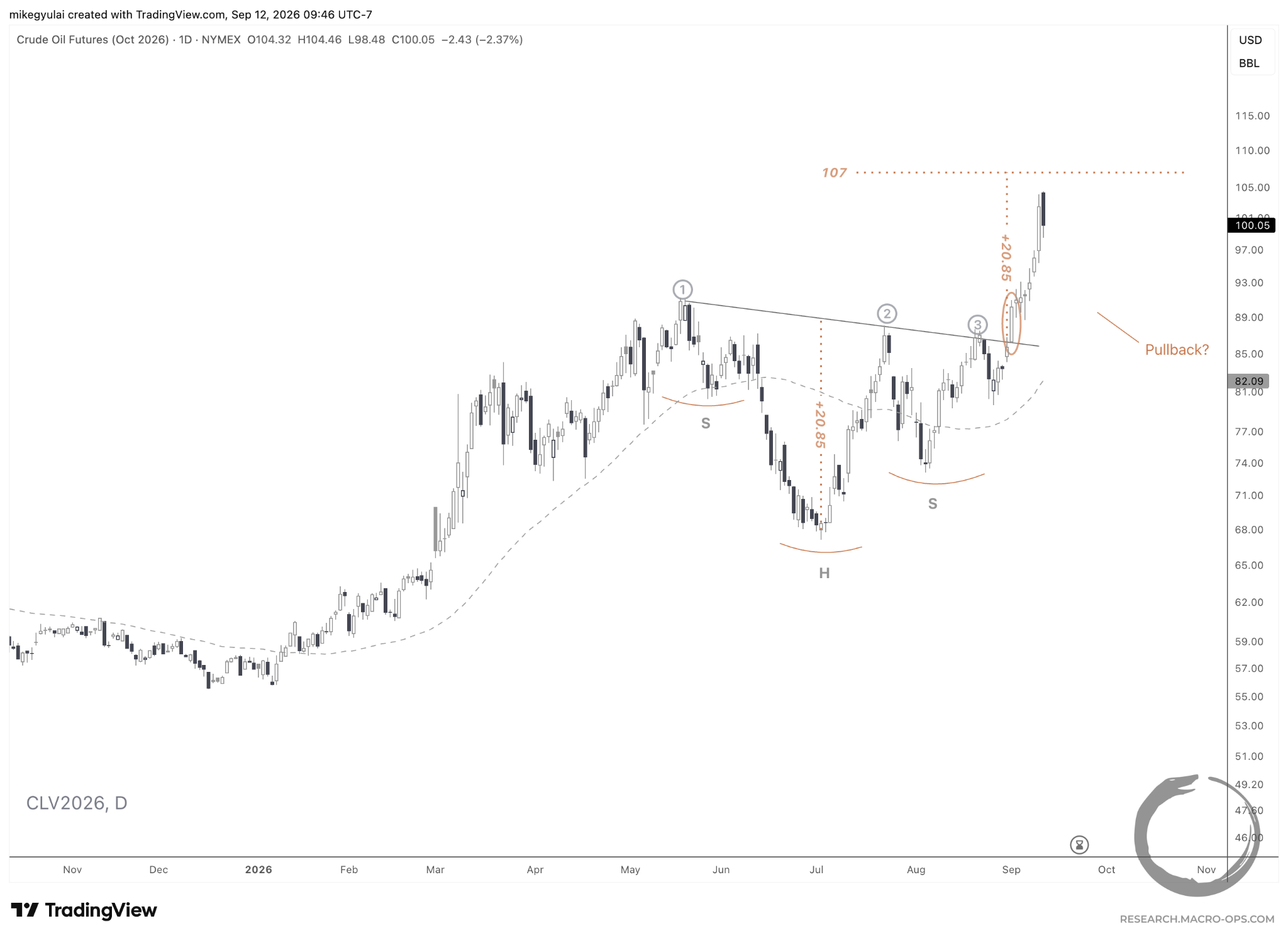
October crude oil surged toward the 1x measured move target of 107 after breaking out of a 3.5-month head-and-shoulders continuation. Our Macro Ops portfolio has remained long December Brent crude all month.
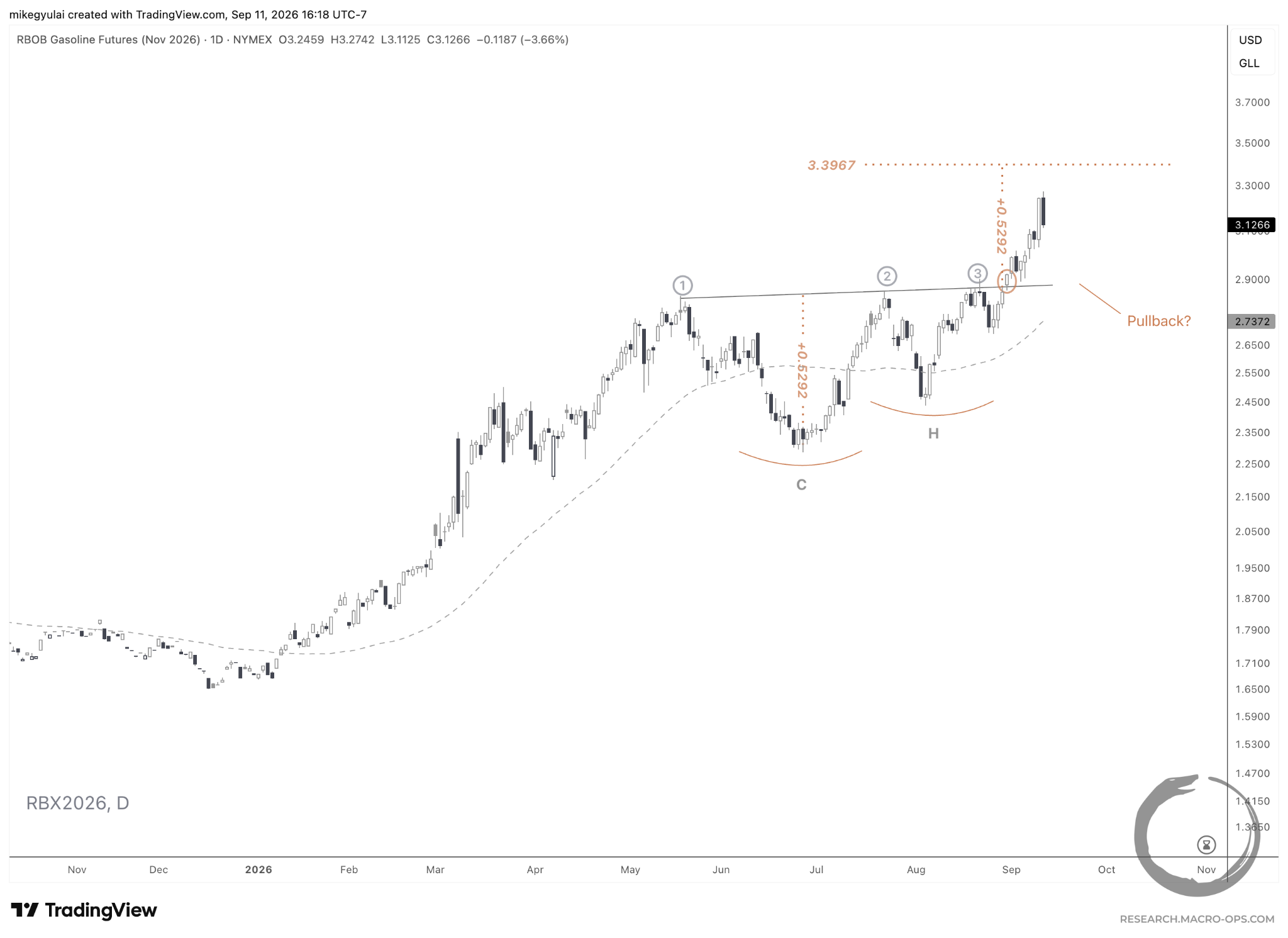
November RBOB gasoline ran to within reach of its 1x measured move target of 3.3967 after completing a 3-month cup-and-handle.
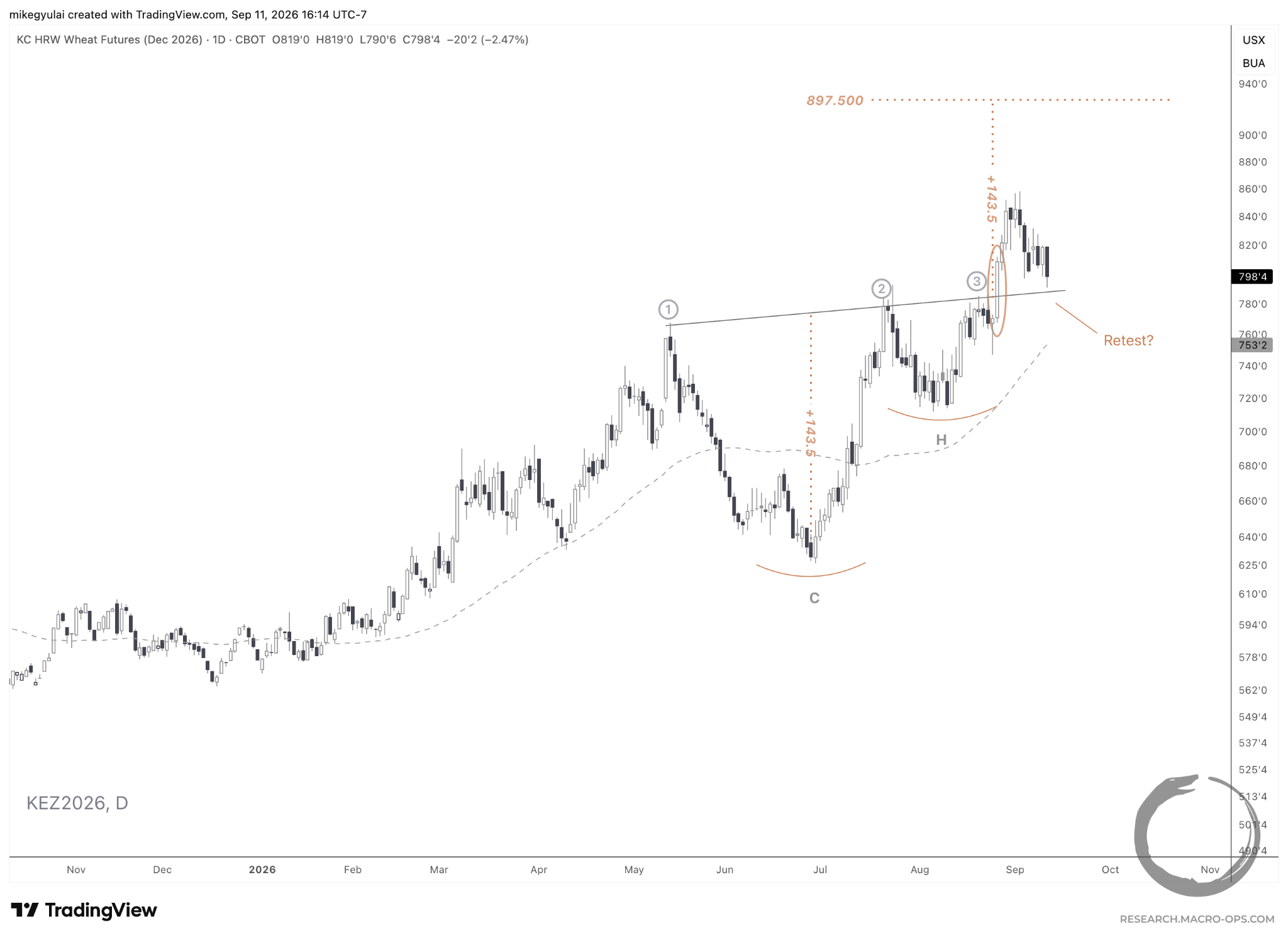
Meanwhile in ags, December KC wheat is pulling back to retest the neckline of its 3.5-month cup-and-handle. We remain long in the Macro Ops portfolio.
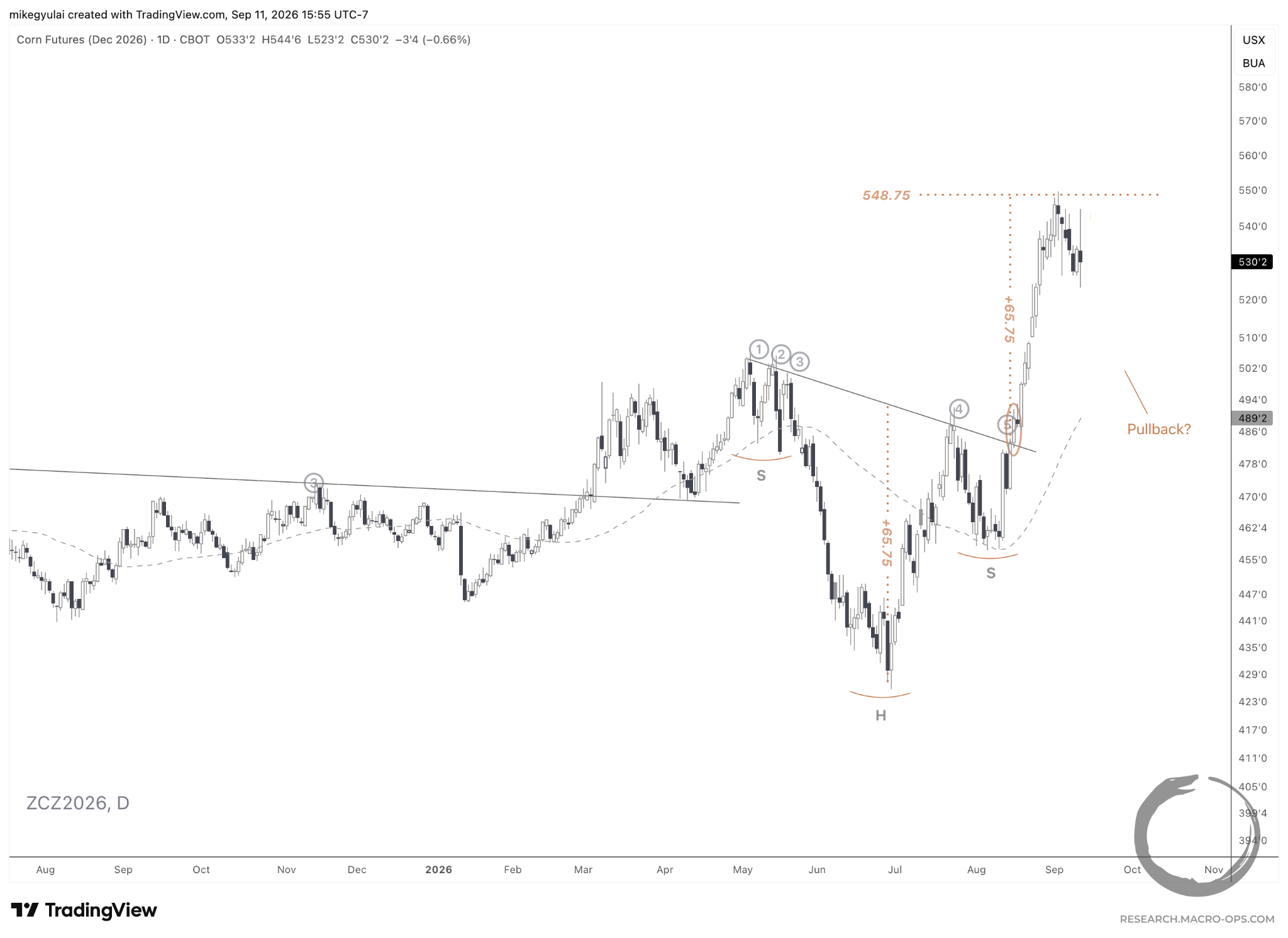
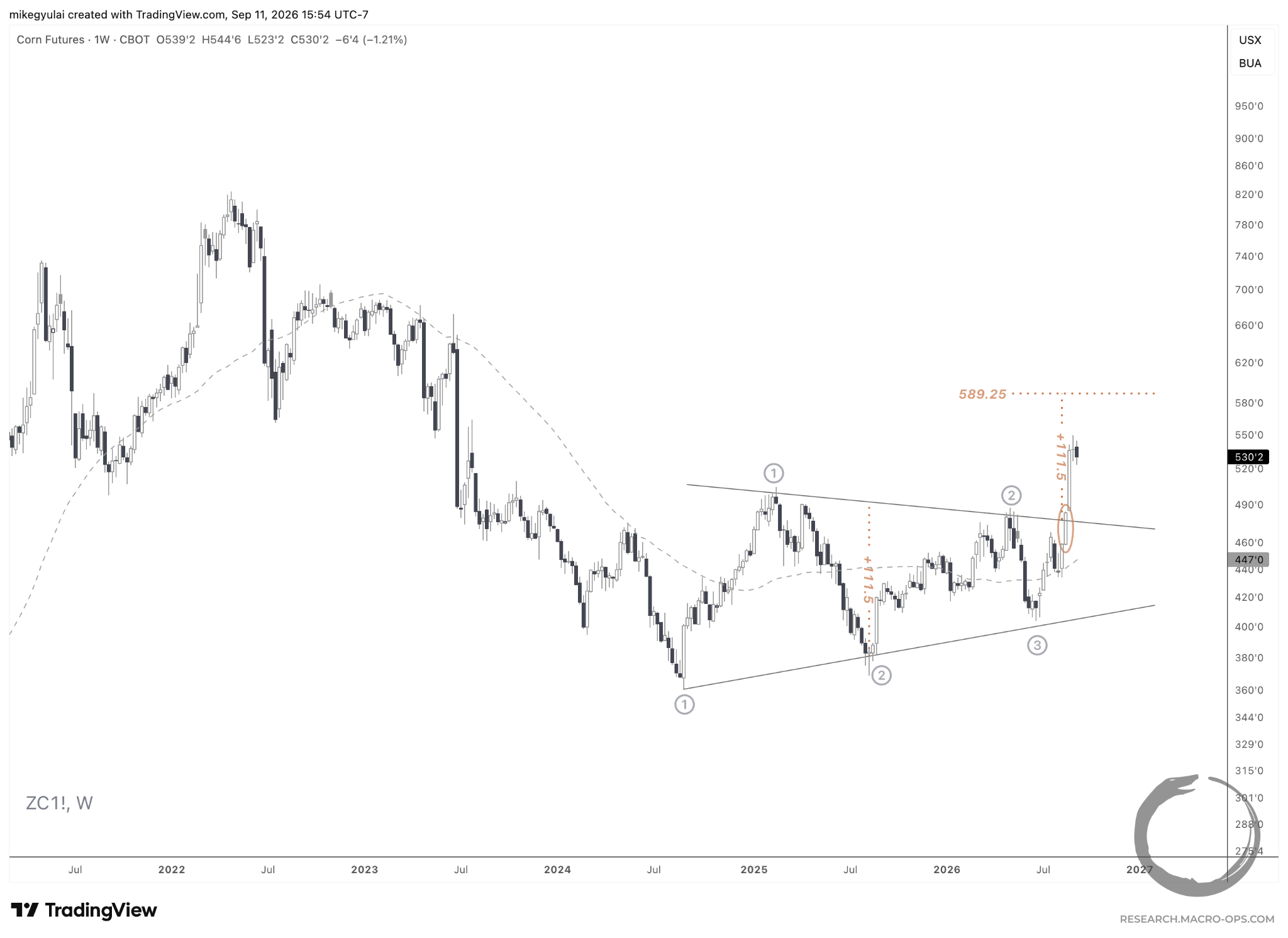
December corn looks set for a retrace of its own back toward the 50-day SMA after reaching the 548.75 1x measured move target of its 3-month head-and-shoulders continuation. A relevant analogue is white sugar futures’ retest of the 50-day SMA this summer. We took profits on our December corn position this week and will look to reenter should a new asymmetric reward-to-risk opportunity develop.
On the weekly timeframe, corn futures have ample room for a healthy correction to play out before resuming toward the 589.25 1x measured move target of their 2-year symmetrical triangle.
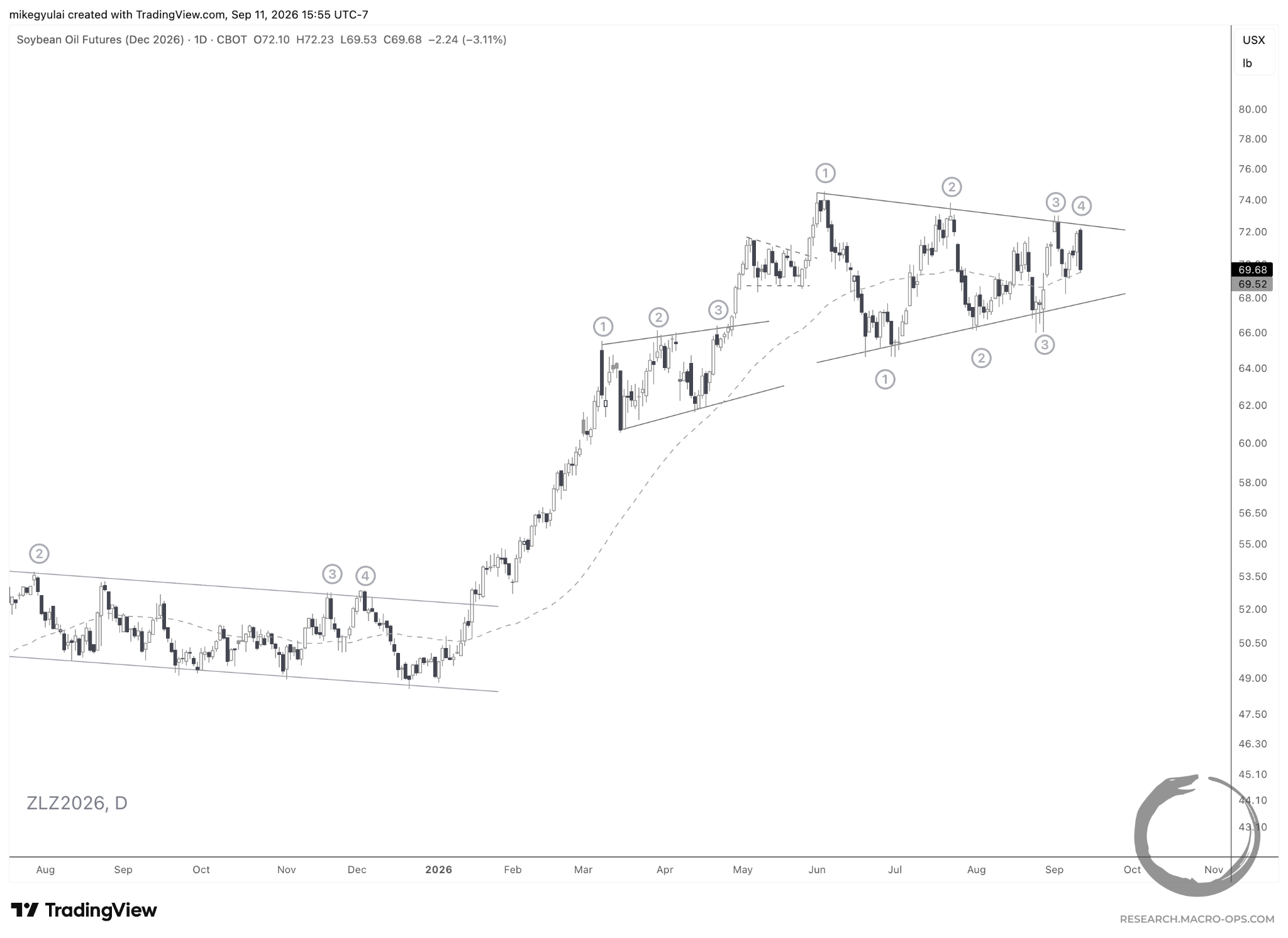
December soybean oil put in a fourth test of the upper boundary of its 3-month symmetrical triangle.
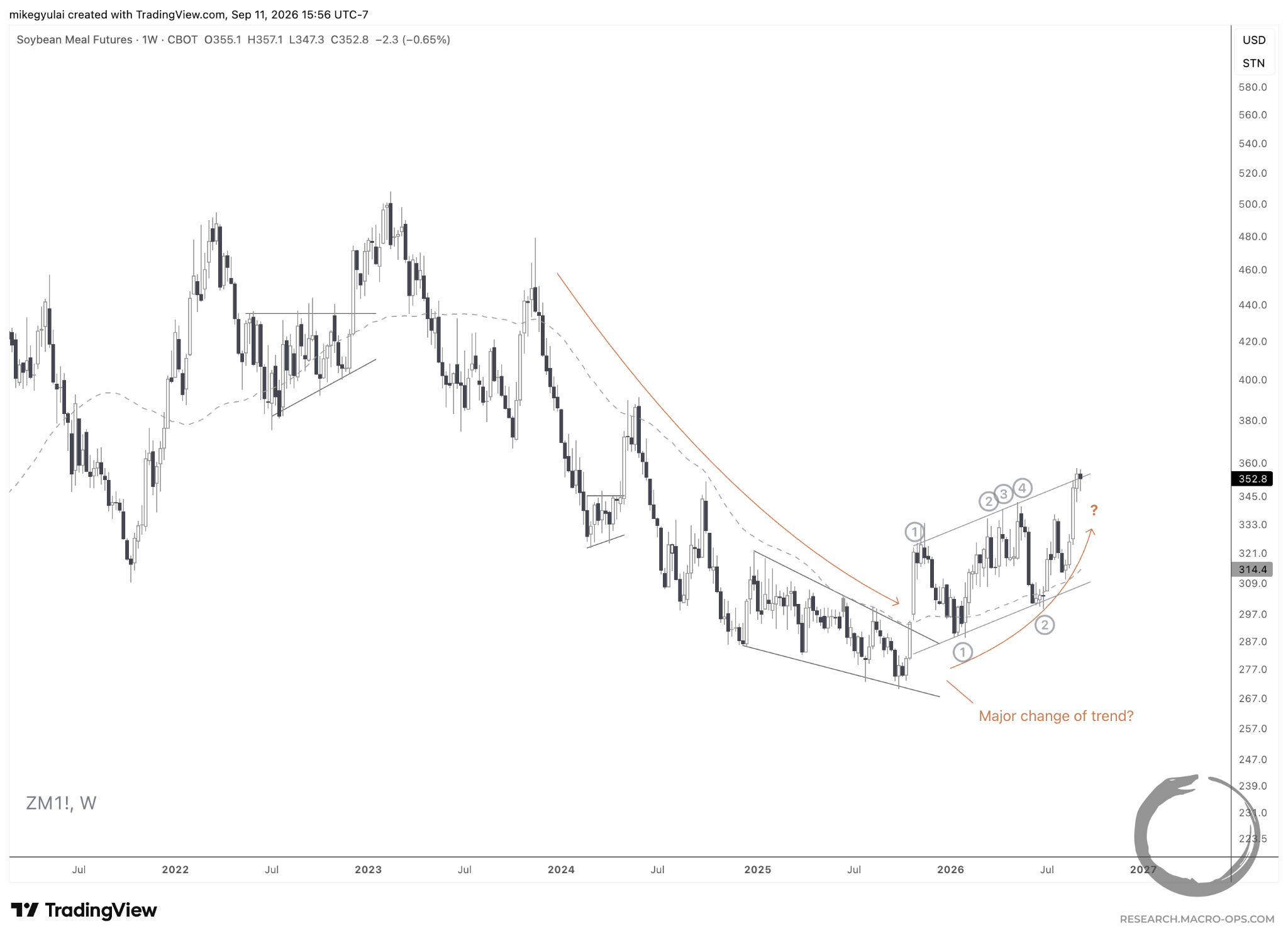
Soybean meal futures spent another week pinned to the upper boundary of their 10-month ascending channel on the weekly chart, offering a logical level to define risk should a breakout occur next week.
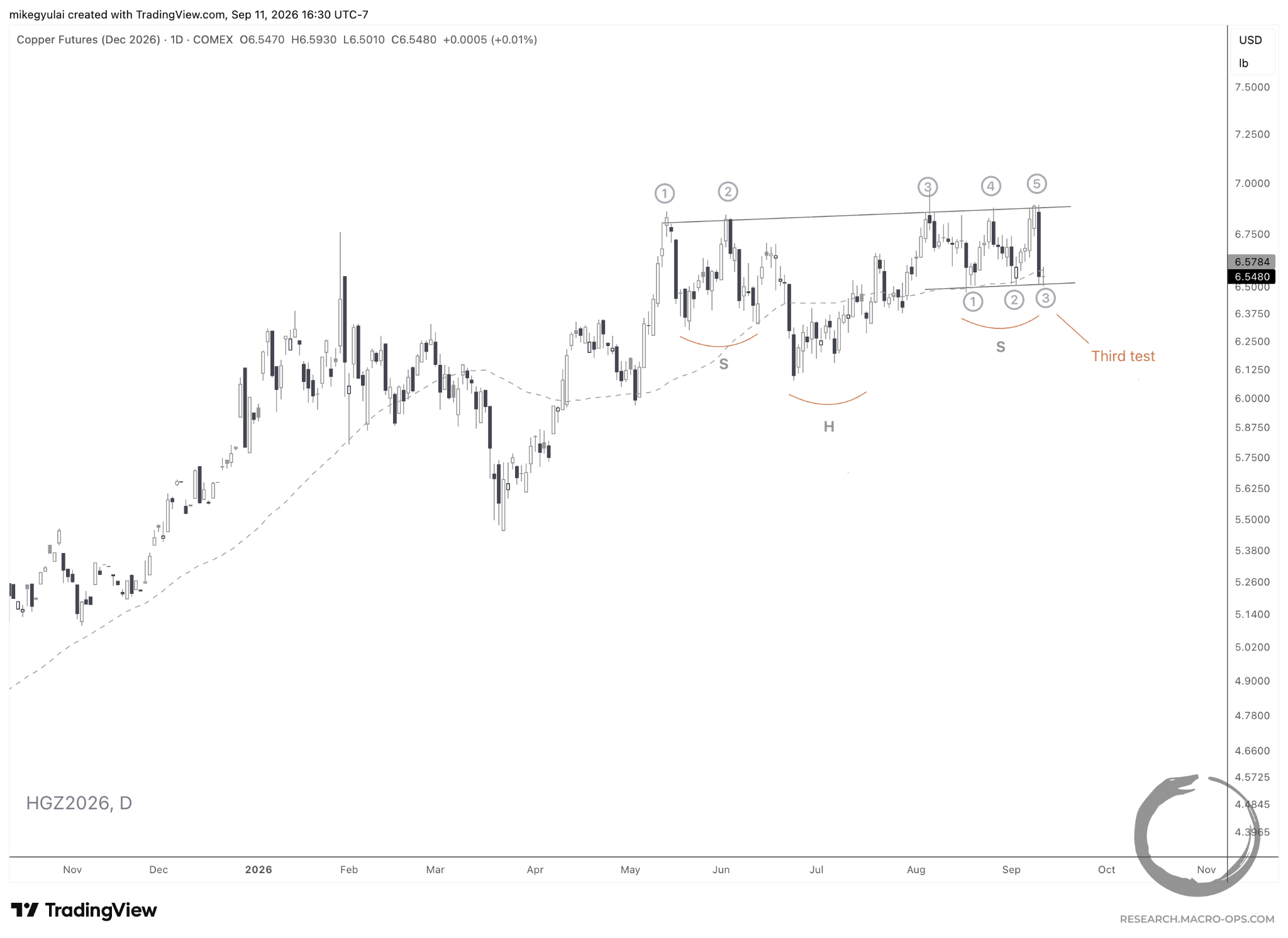
December copper reached the neckline of its 4-month head-and-shoulders continuation, but has since hit the right shoulder low three times, setting up the possibility of a continuation failure.
The Pauses That Refresh
In a detailed report released this week, Dean Christians, our Lead Equity Market Strategist, analyzed the technical backdrop of the consumer discretionary sector. 21-day lows in the sector surged to levels not observed since the 2022 bear market. His Turning Point Report from September 10, 2026, breaks down what this means for both short- and long-term allocations.
Here are the equity names that caught my attention in this week’s screen:
Active watchlists, real-time positioning updates, and live portfolio tracking are reserved for members of The Collective, our premier service offering discussions on high-level theory and performance, differentiated research, and a global community of serious traders and investors dedicated to mastery. Learn more about The Collective here.