



Last year, my wife named the bottleneck in her architectural design business. Clients hire her for her eye, her taste, the way she communicates a vision. Yet contract drafting, order tracking, bookkeeping, and invoicing consumed almost half her working hours each week. To take on more clients—to serve more people with what they hire her for—required space she did not have.
We debated a part-time assistant. Then Claude Cowork launched. Over three weeks, we trained it to draft her contracts, track her orders, keep her books, and generate her invoices. Once trained, it cut her administrative hours by more than half. The hours she got back went not to idle leisure, but to all that makes her come alive: designing, observing, researching, sitting across the table from clients.
The debate over whether AI will save or enslave us misses what is already true: it is working in service of humanity today. The unlock is naming what in your work is rote administration and what is uniquely human.
Traders, buried in numbers and models, see only the first.
One trader I know described “market feel” as the heart of his process. We ran the same exercise: which hours crowded out cultivating that feel? The tedious logging of trades in his journal. In one week, we trained AI to read a single post-mortem chart and file every trade for him. The hours he got back went straight to what only he can read: order flow, closing auctions, news failures.
Another intuits price structure so well he manages open positions better than any ruleset he can write. His bottleneck was getting into positions at all. He would loop on analysis, find imperfections in every setup, or become overwhelmed by opportunity in fast-moving markets. AI now enters every valid setup—at conservative size with a stop attached—for him. It never hesitates, never second-guesses his rules. He arrives at his desk each morning, unencumbered, to do what he does best: manage open exposure.
The verdict is in. AI is here to serve our humanity—to accentuate what each of us does that no system can replace. Which part of your craft is purely administrative? Which part is unmistakably you?
Name both, and the future so many are still debating becomes yours today.
Equities vs. Energy
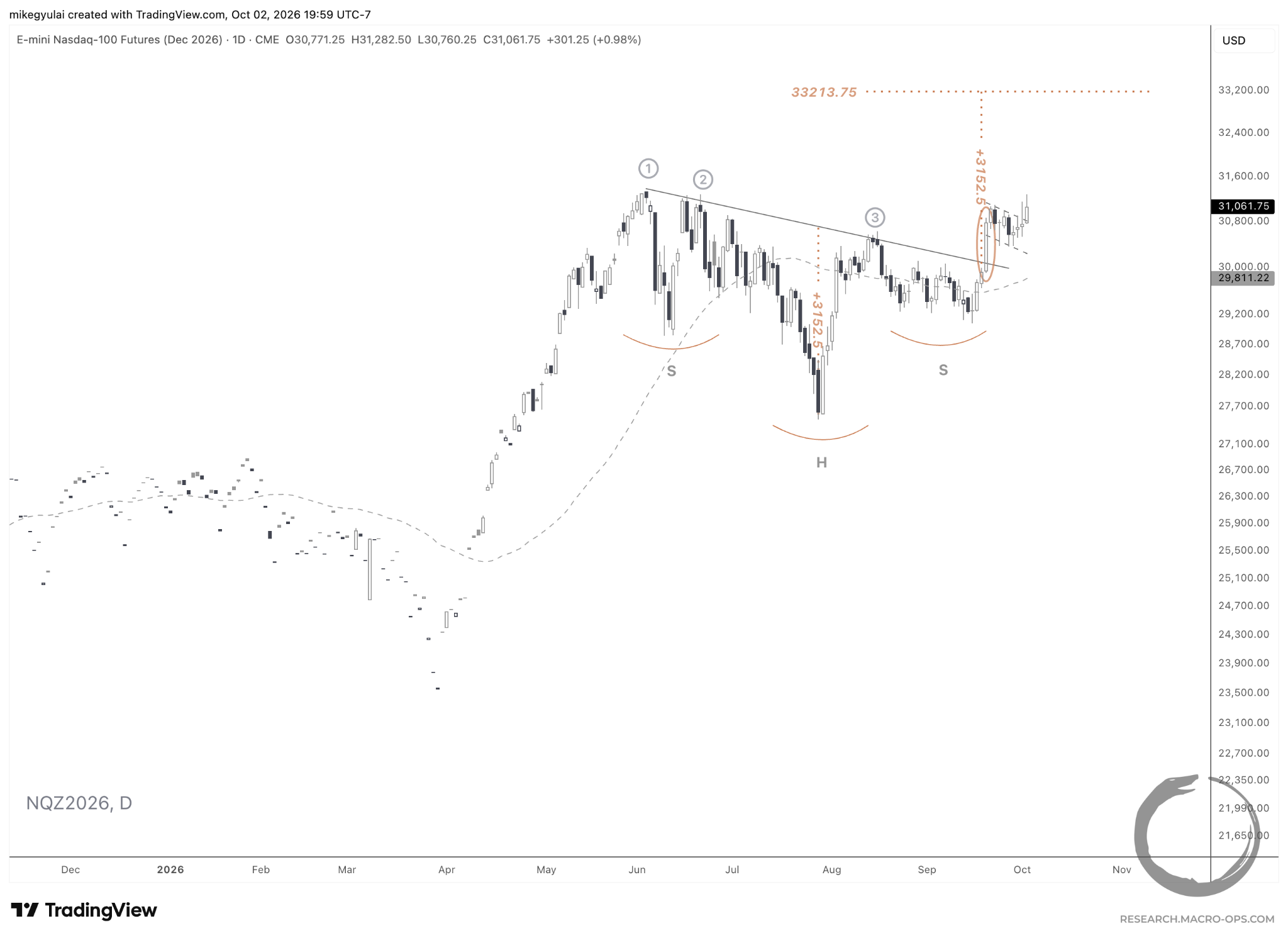
The Nasdaq’s December contract held its breakout this week from a 3.5-month head-and-shoulders continuation. Price is now right up against the prior high from June, an important level to watch next week.
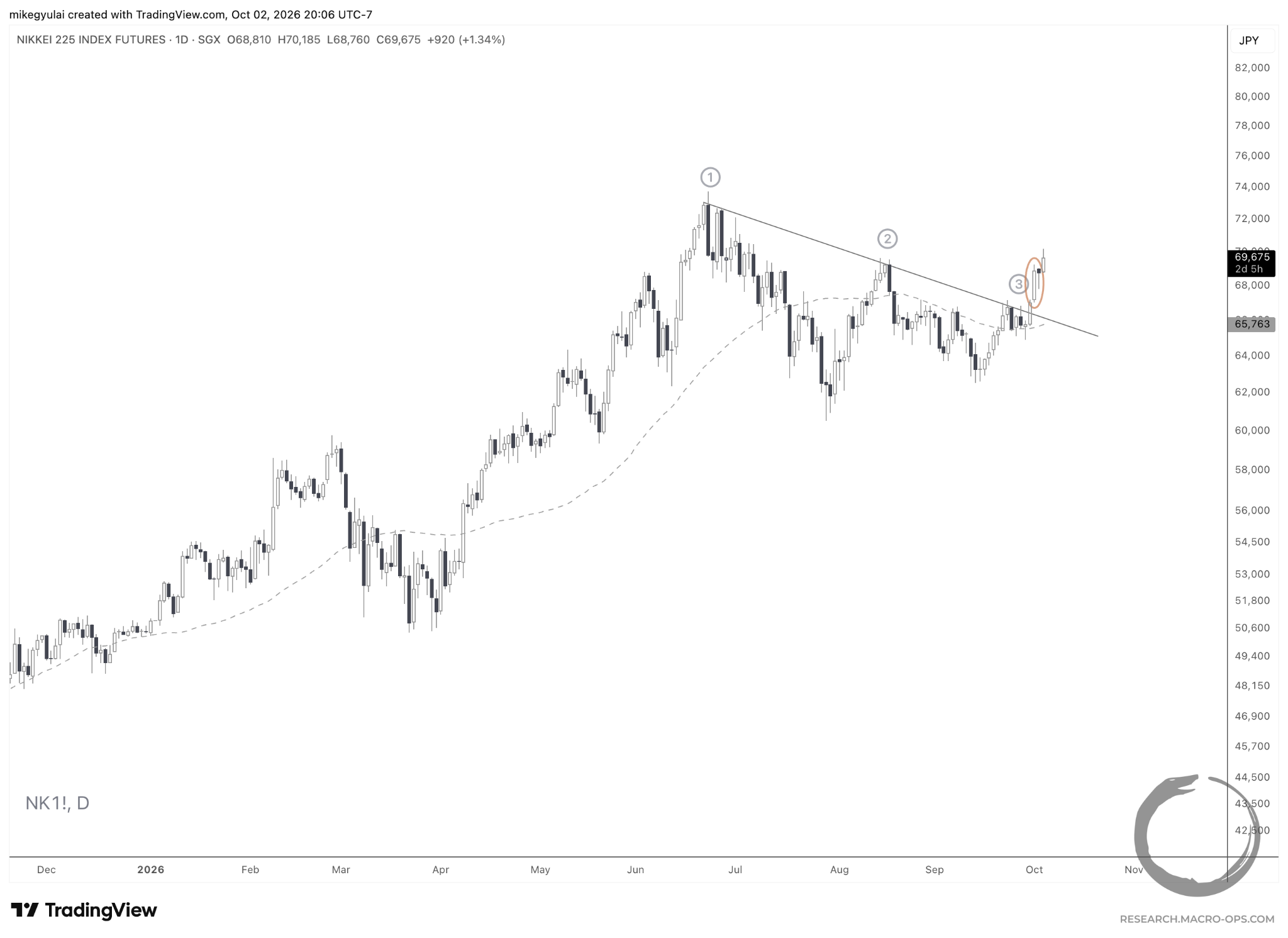
The Nikkei has a similar look, having broken out Thursday from a 3-month multi-point trendline.
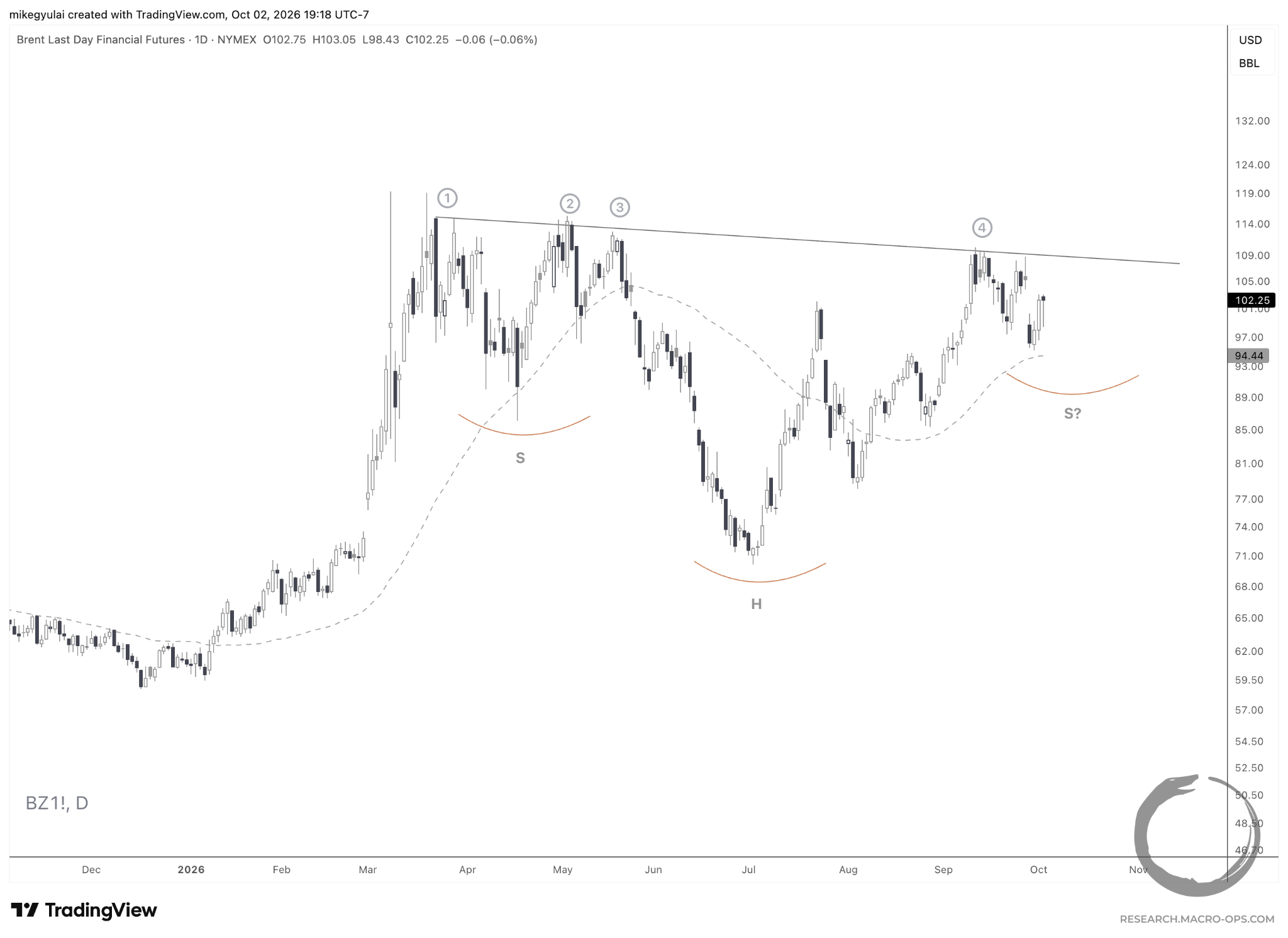
A potential threat to equity resilience is energy. Brent futures are forming what could be a 5.5-month head-and-shoulders continuation.
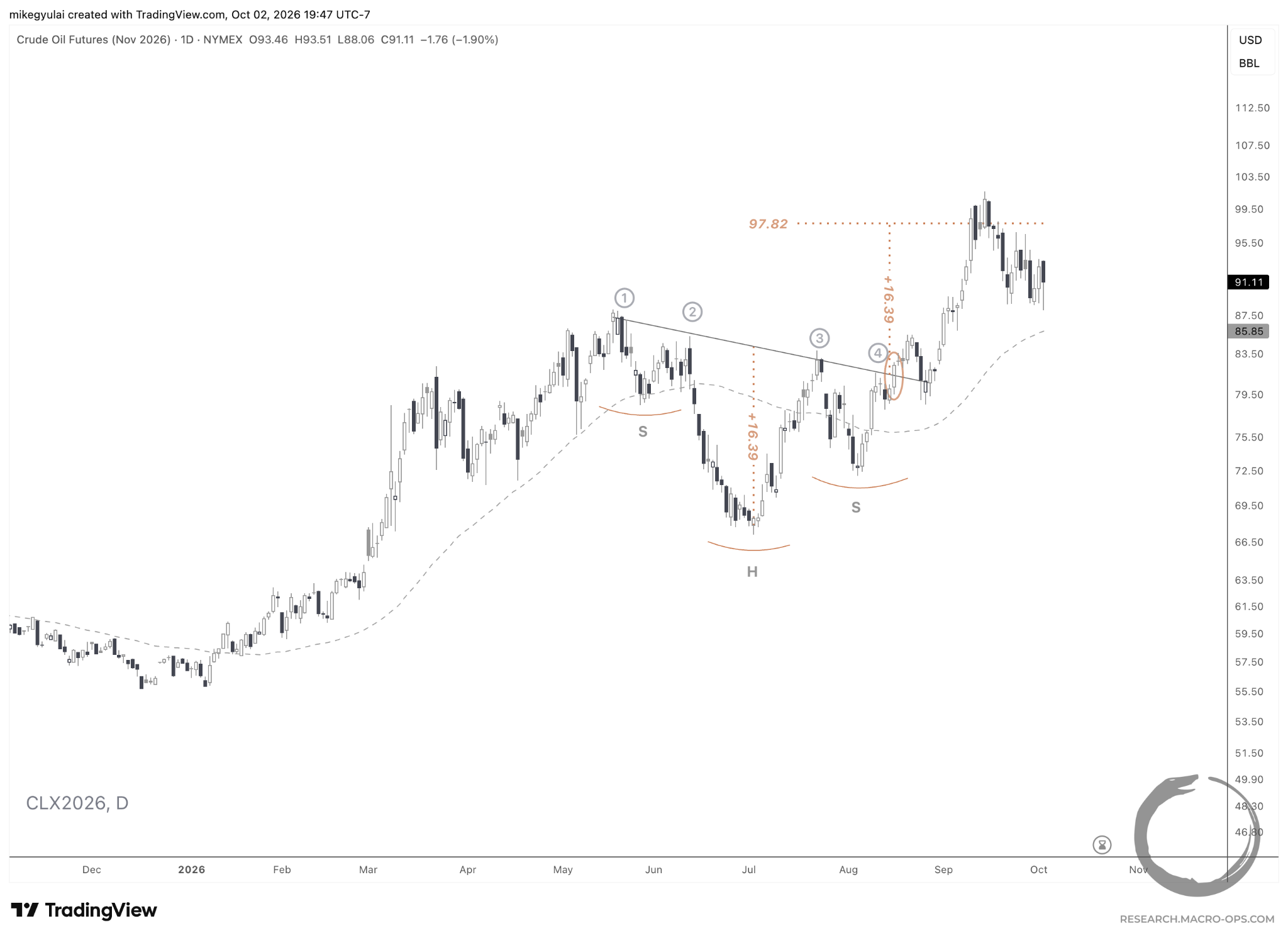
The same structure appears in WTI. November crude oil is flagging above its 50-day SMA after reaching the 1x measured move target of its 3-month head-and-shoulders continuation.
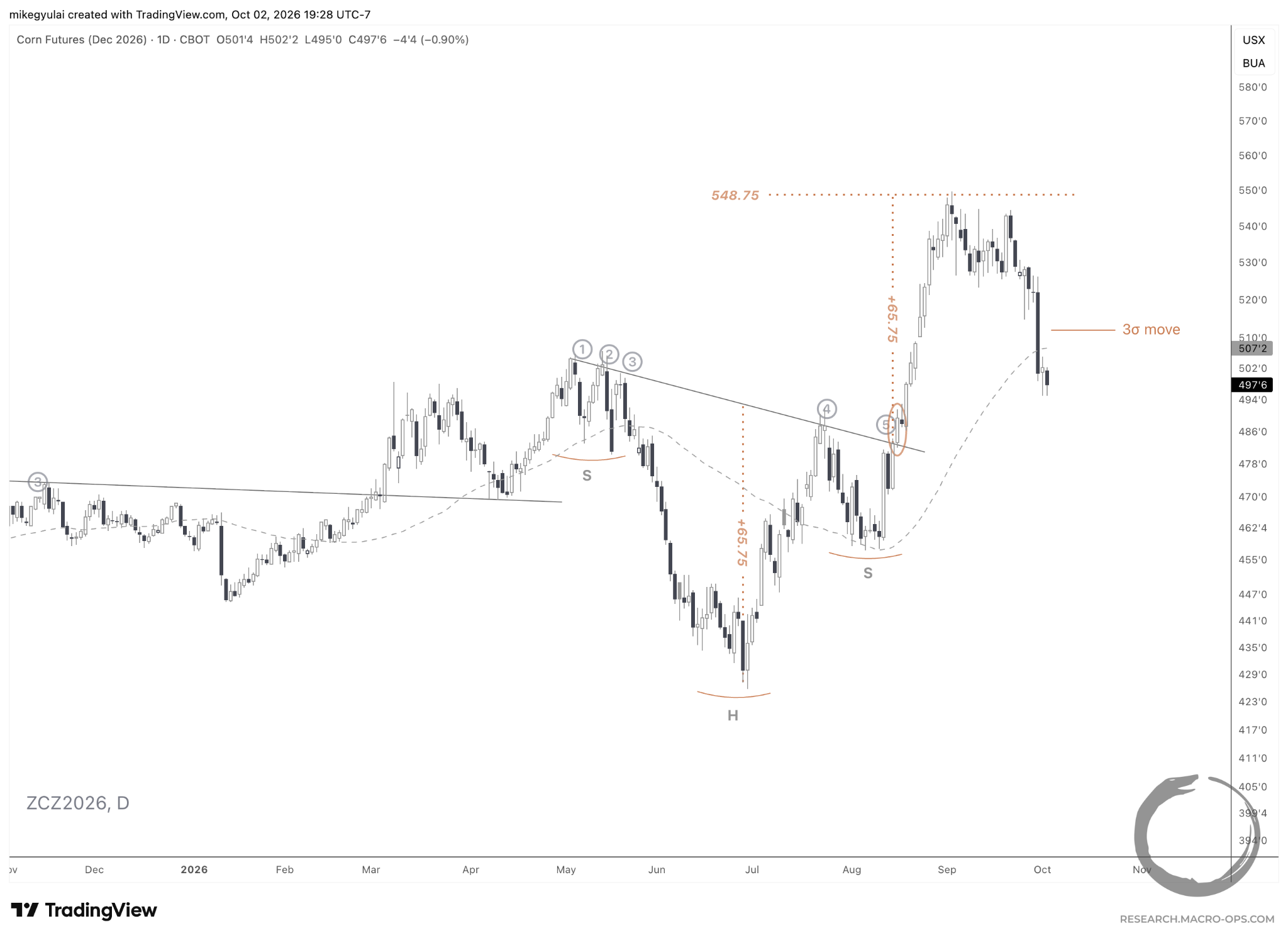
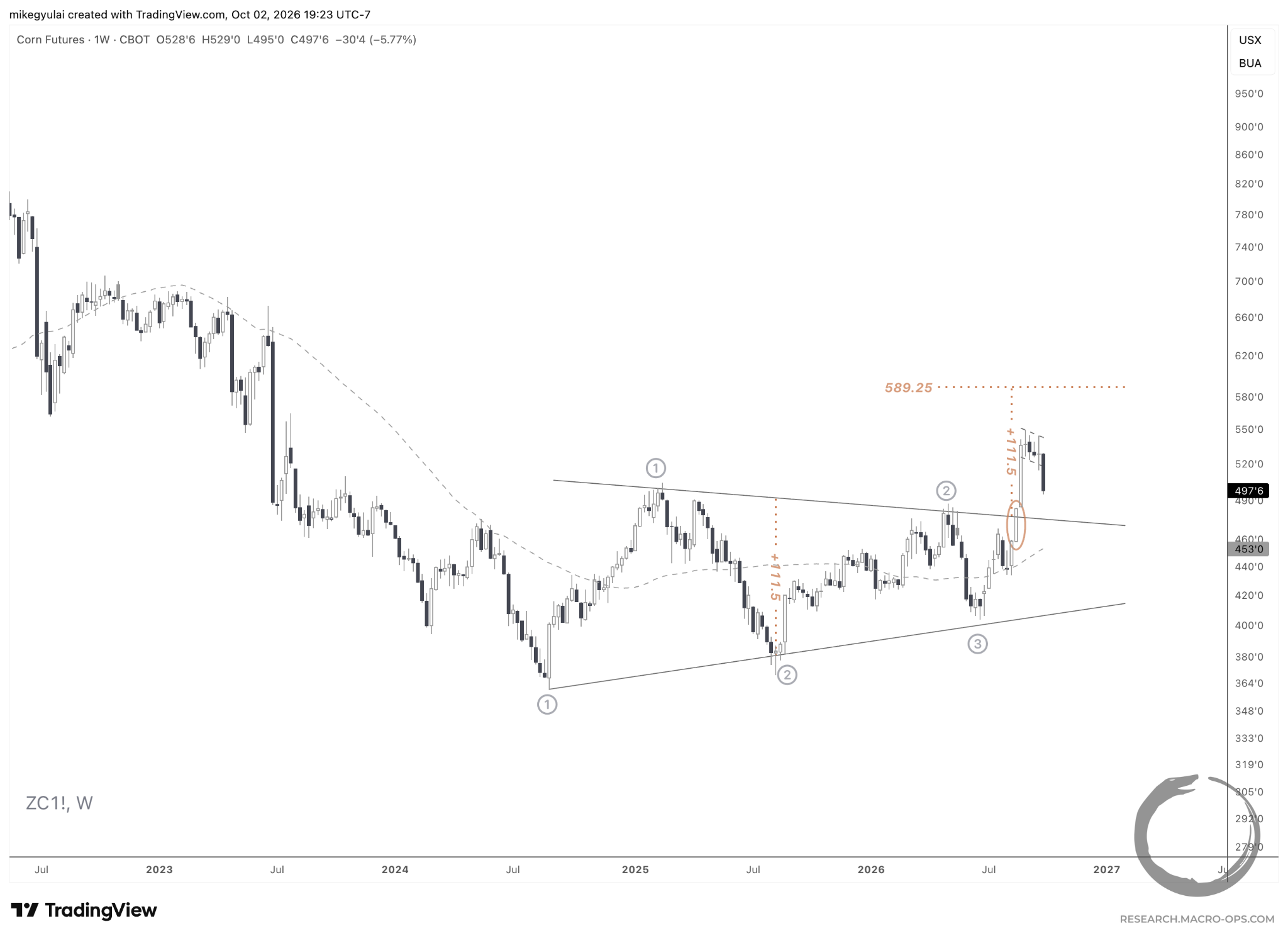
Last week, we speculated that a pullback in corn could be imminent after price had reached the 1x measured move target of a 3-month head-and-shoulders continuation on the daily timeframe. The competing view was the 2-year symmetrical triangle on the weekly timeframe, flagging at half-mast on the way to its 1x measured move target. One of the two views had to break, and it did on Wednesday as the pullback on the daily played out. A member of The Collective noted that the midweek selloff was a 3-standard-deviation move.
Despite last week’s impulsive selloff, the weekly timeframe maintains its bullish structure, with price well above the upper boundary of the 2-year symmetrical triangle and a 1x measured move target at 589.25.
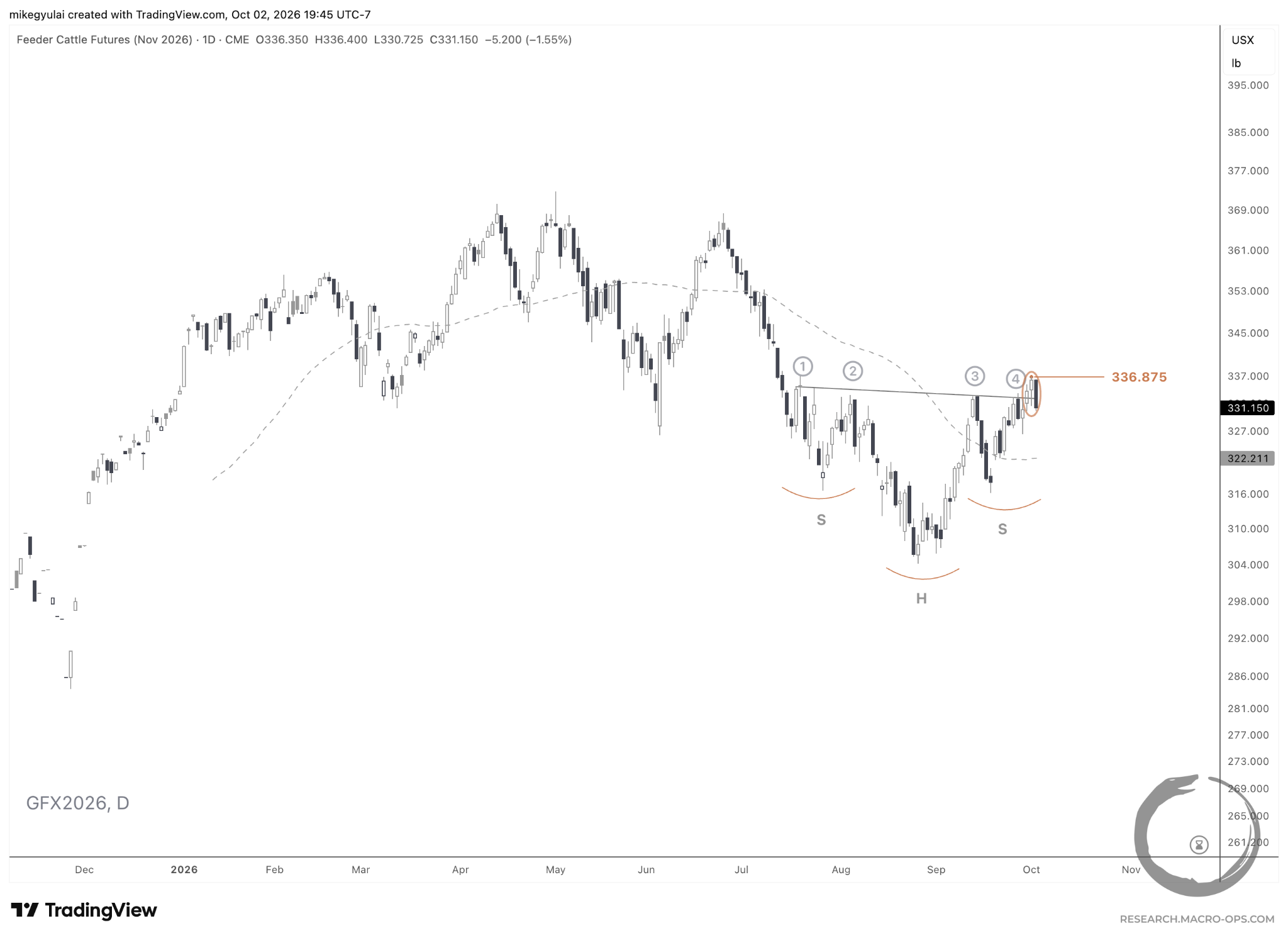
November feeder cattle attempted to break out on Thursday from a 2.5-month head-and-shoulders before reversing back to the neckline on Friday. Thursday’s high at 336.875 becomes the level to watch for a secondary completion.
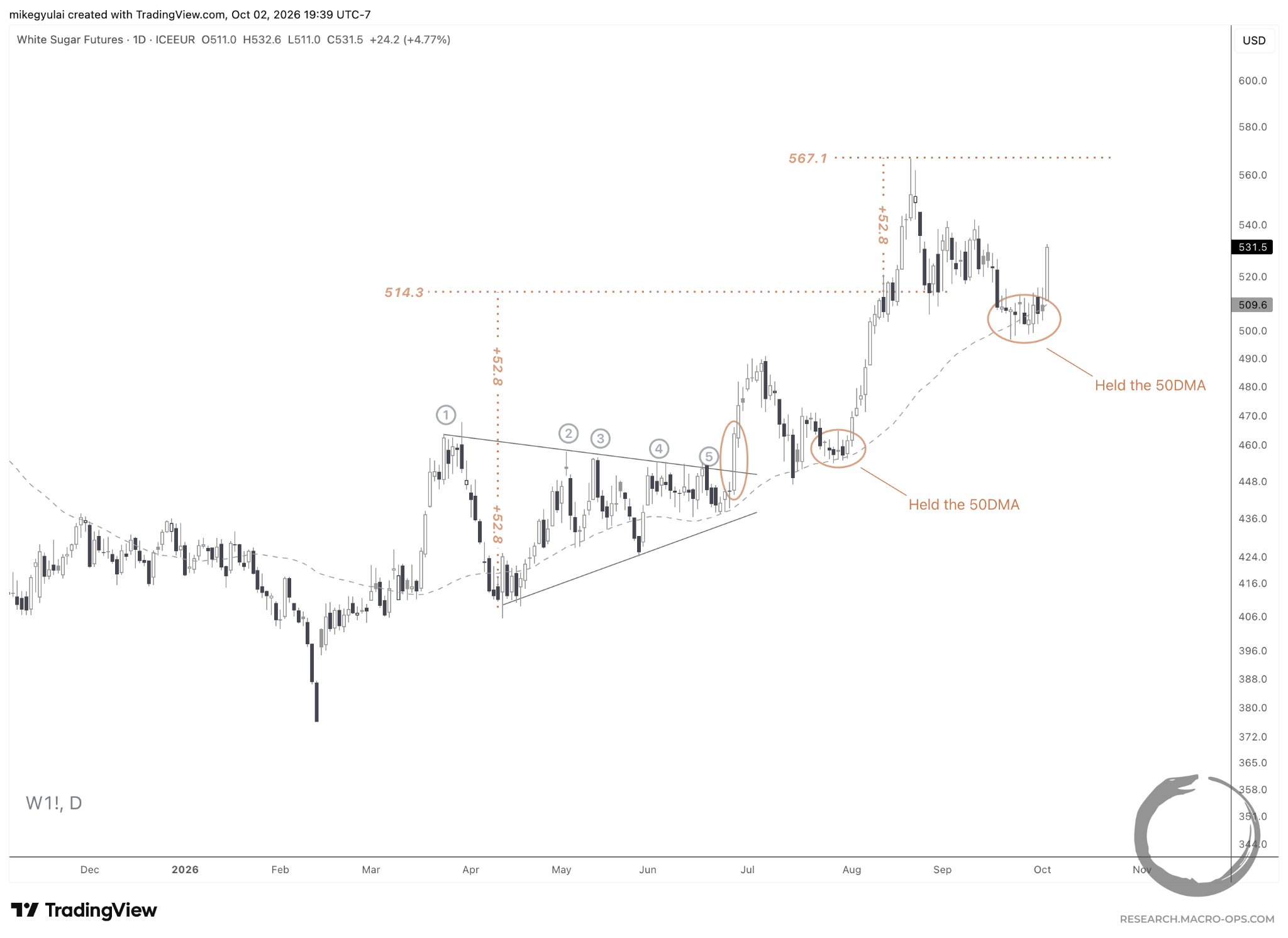
Other agricultural commodities firmed. White sugar futures held the 50-day SMA for the second time since their June breakout from a 3-month symmetrical triangle. Both 1x and 2x measured move targets have been reached.
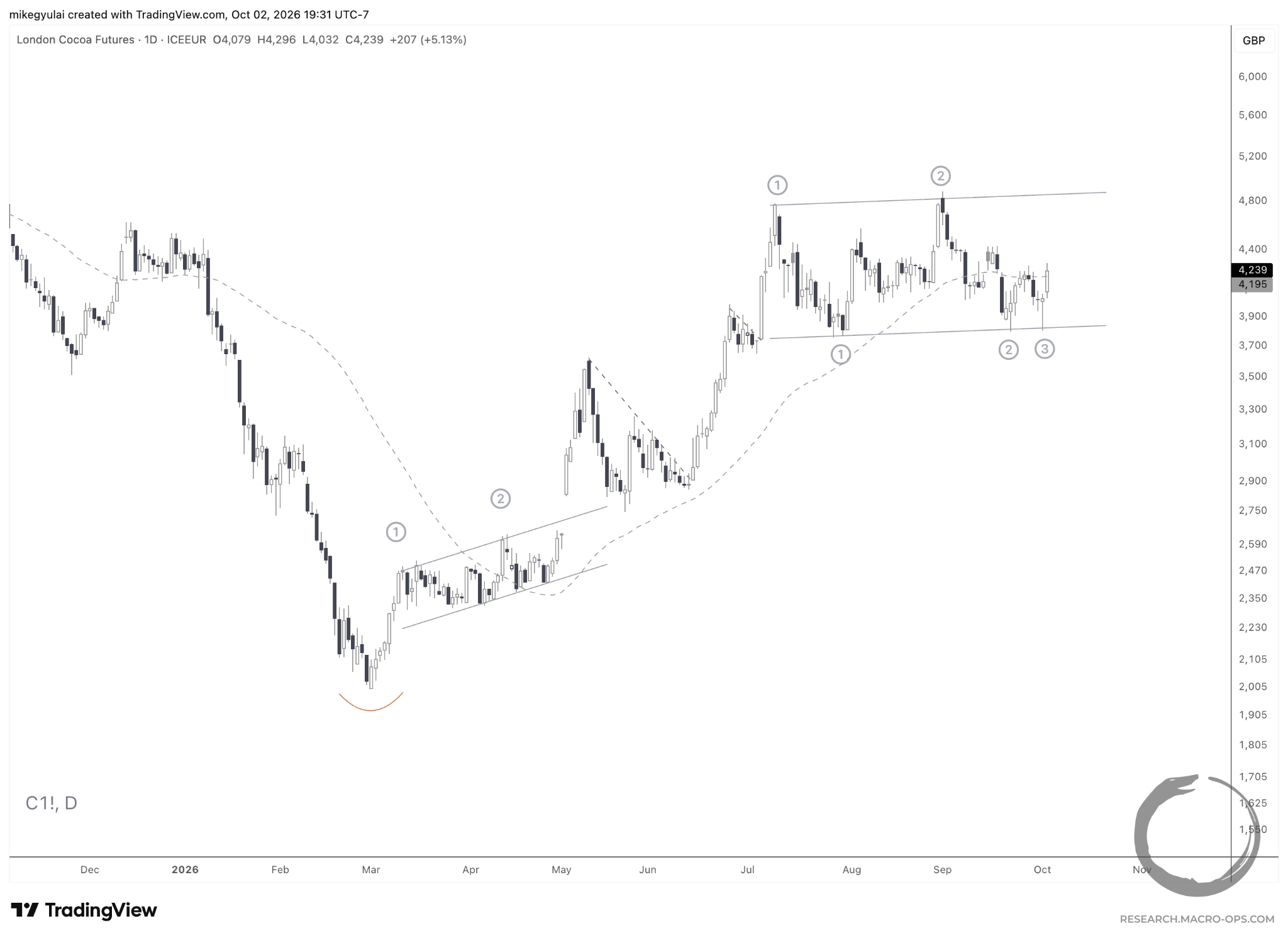
The London cocoa pattern previously labeled a cup-and-handle has morphed into a 3-month ascending channel. Price found support at the lower boundary twice in two weeks.
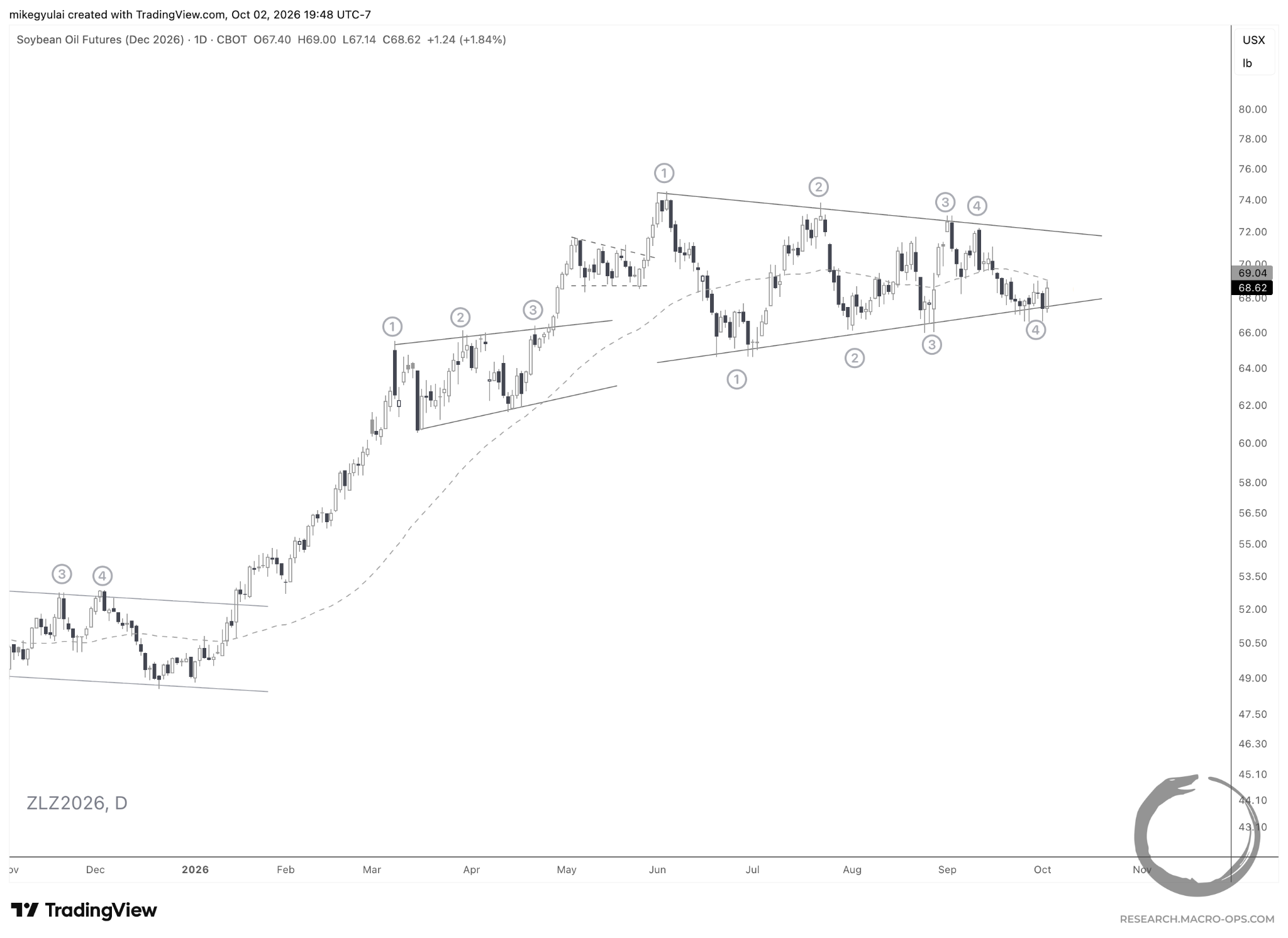
December soybean oil looked primed to break down this week from the 4-month symmetrical triangle we have been tracking, but found buyers at the lower boundary each time. The more times a level is tested, the more vulnerable that level becomes to failure. Both upper and lower boundaries have now been tested multiple times.
Forex in Focus
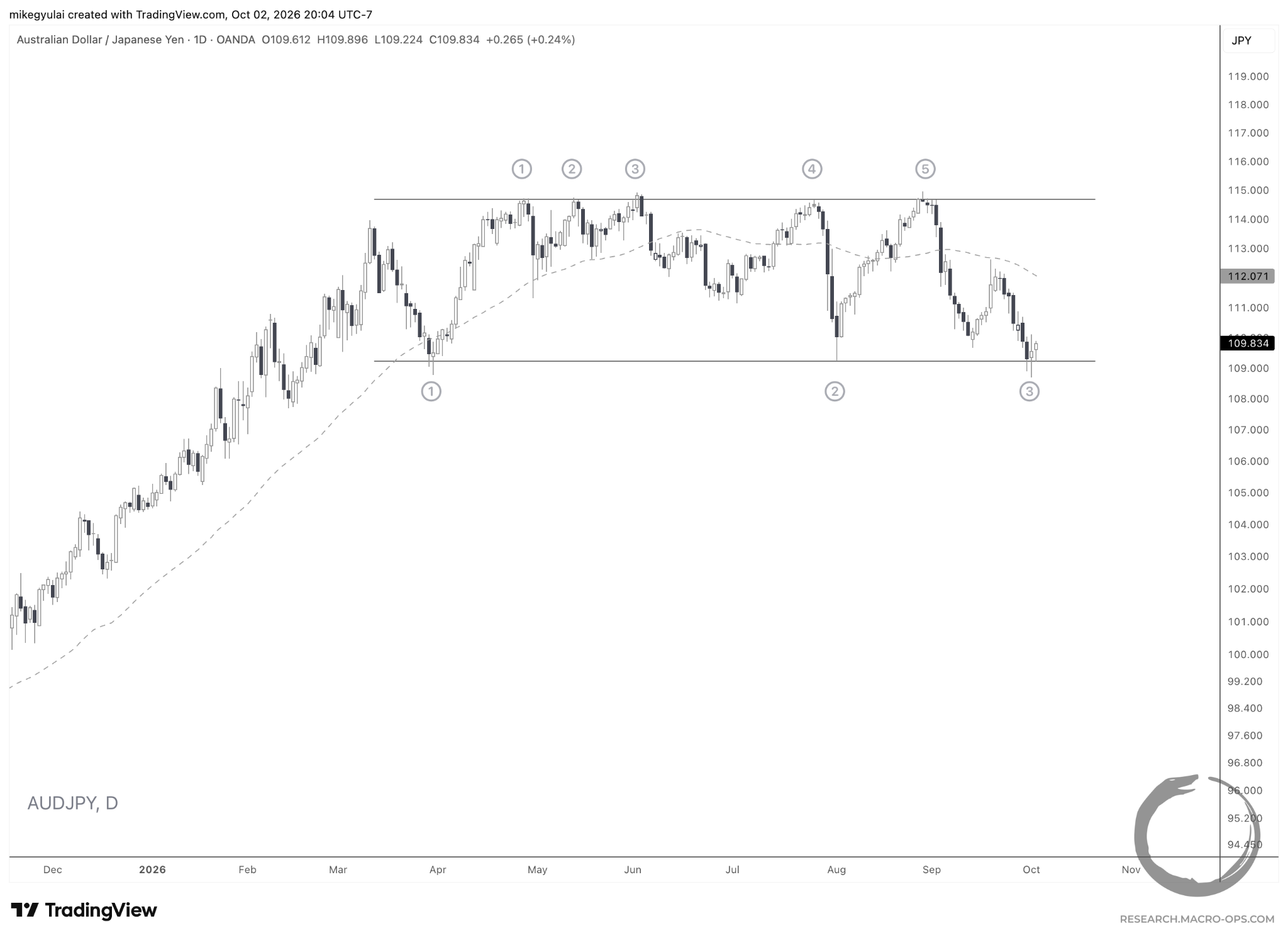
There are a number of large ranges in currencies at the moment. AUD/JPY is testing the lower boundary of a 6-month rectangle.
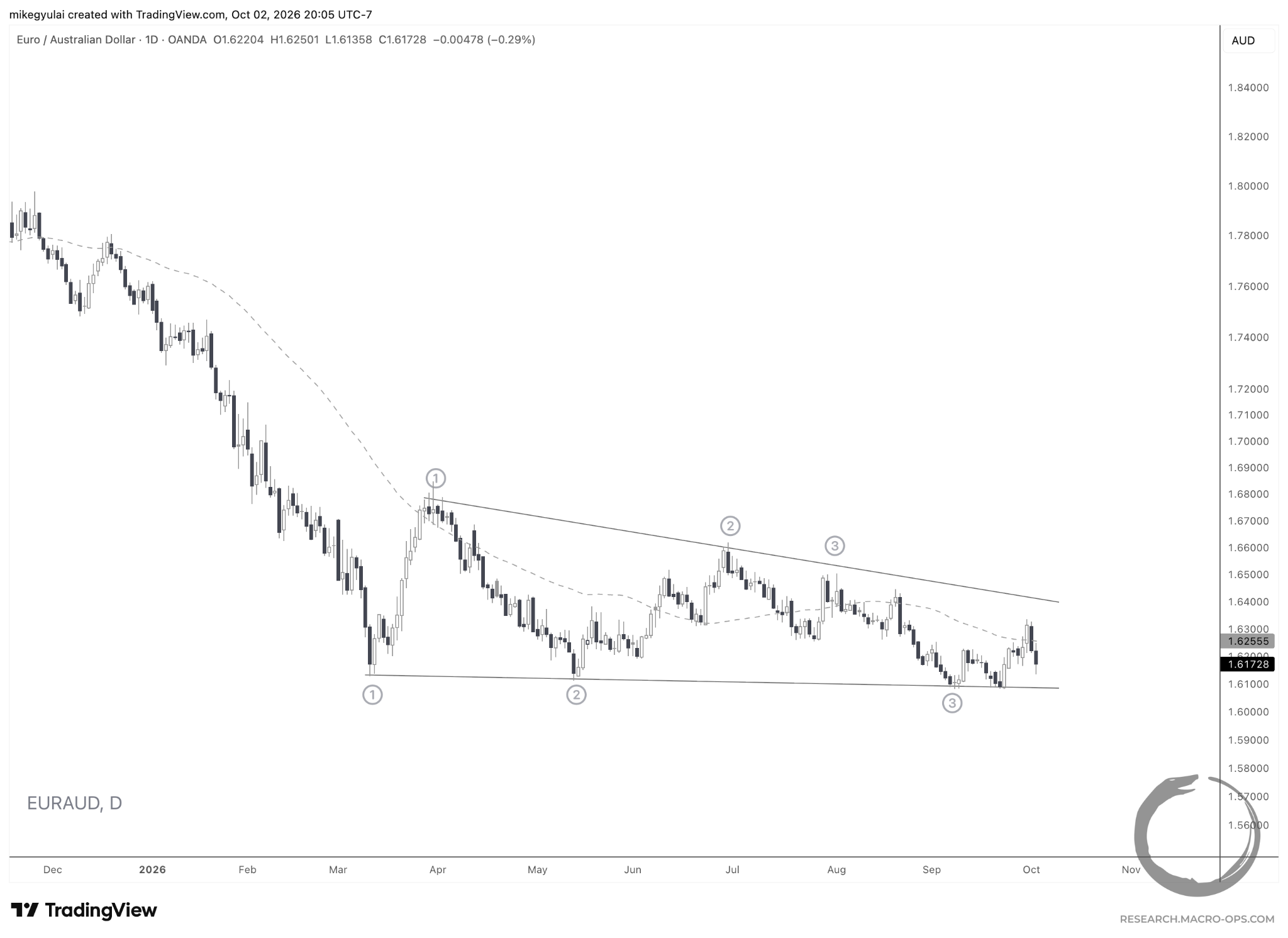
EUR/AUD continues to coil inside a 6.5-month descending triangle.
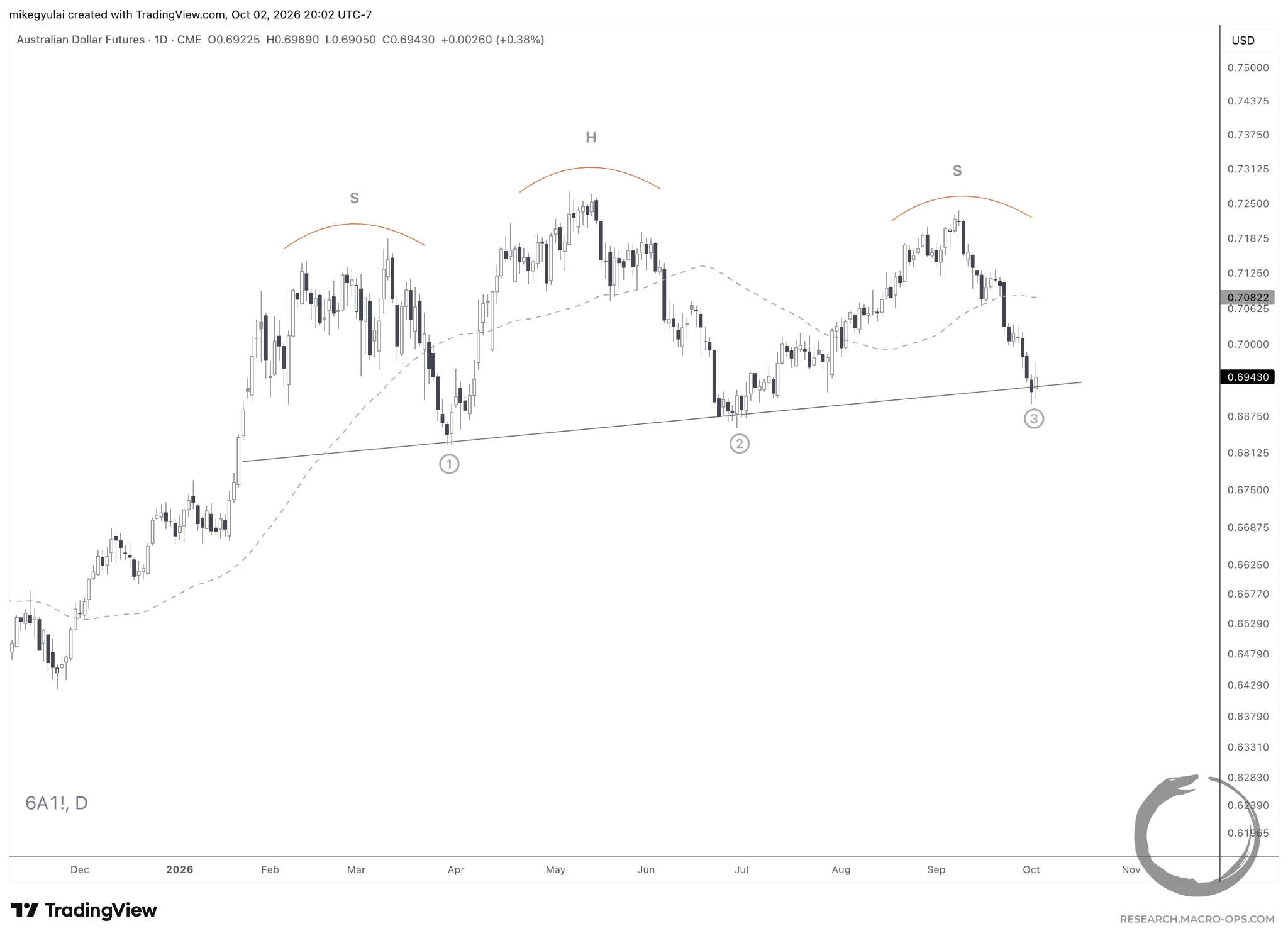
And Australian dollar futures have formed an 8.5-month head-and-shoulders top.
The Pauses That Refresh
My recent equity screens continue to reveal a sharply divided market, presenting a diverse mix of long and short setups alongside continuation and reversal patterns.
On Friday, Dean Christians, our Lead Equity Market Strategist, issued a report for members of The Collective regarding the accelerating stealth correction he has been tracking. Notably, the equal-weighted S&P 500 is pacing toward its seventh consecutive weekly decline—a streak not observed since the 2022 bear market—even as the standard SPX remains within 2% of its all-time high. Dean describes this market environment as “unprecedented,” making his analysis required reading for anyone managing equity-focused portfolios.
Below are the names that caught my attention in this week’s equity screen:
Active watchlists, real-time positioning updates, and live portfolio tracking are reserved for members of The Collective, our premier service offering discussions on high-level theory and performance, differentiated research, and a global community of serious traders and investors dedicated to mastery. Learn more about The Collective here.