


Summary: Internals, credit, and short-term breadth are all deteriorating. Add rising inflation volatility and a run of news failures, where earnings beats are getting sold in names like MU, INTC, GOOG, and ASML. That’s enough to stay defensive into this week’s FOMC, where the market may be underpricing a surprise 50bp hike.
The DXY looks ready to move again. Long bonds keep compressing. Historically elevated earnings expectations are not the bullish setup they’re sold as, and ship crossings through the Strait of Hormuz are back to nil. That’s going to matter soon.
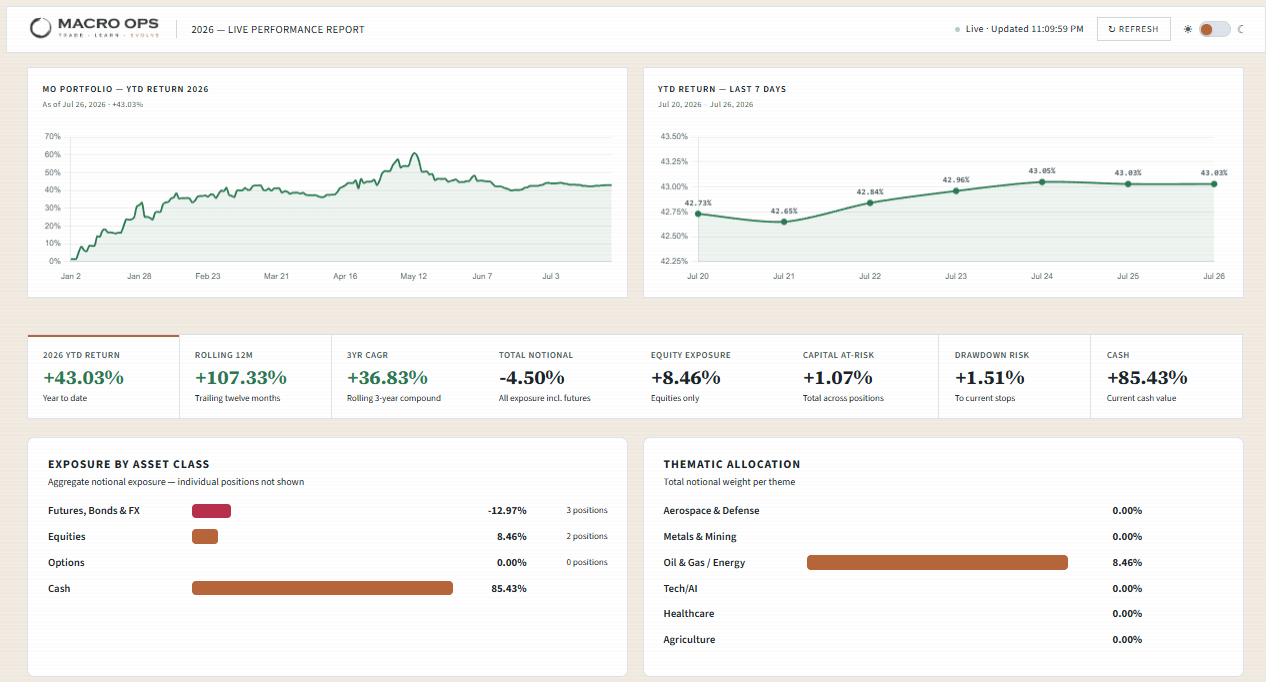
***The MO port is currently up +43% ytd in 26’. The Collective is where we discuss the theory behind the positioning, publish the differentiated research, track the book in real time, and argue it out with a global group of serious investors. If that’s your kind of room, join us in Slack. ***
MO Portfolio & Trades
1. The portfolio rose 50 basis points last week, leaving us +43% on the year, below our high-water mark of +61%. We recently reset to mostly cash with a small Nasdaq short, small crypto longs, and a small long in oil and gas equities.
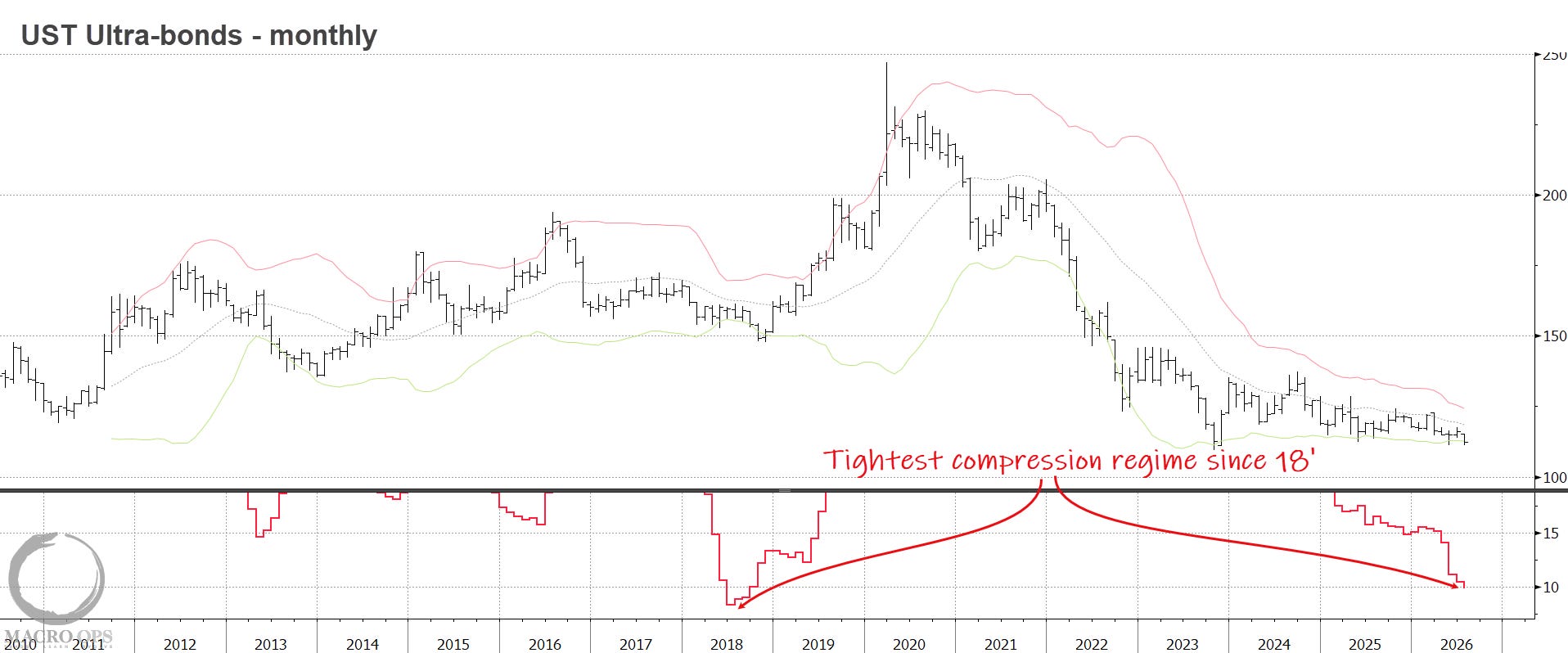
2. Bonds are compressing. Bollinger width on the monthly is its narrowest since 2018. Compression regimes are reliable in exactly one respect: they precede large moves. They say nothing about direction. Our bias is that this one resolves lower.
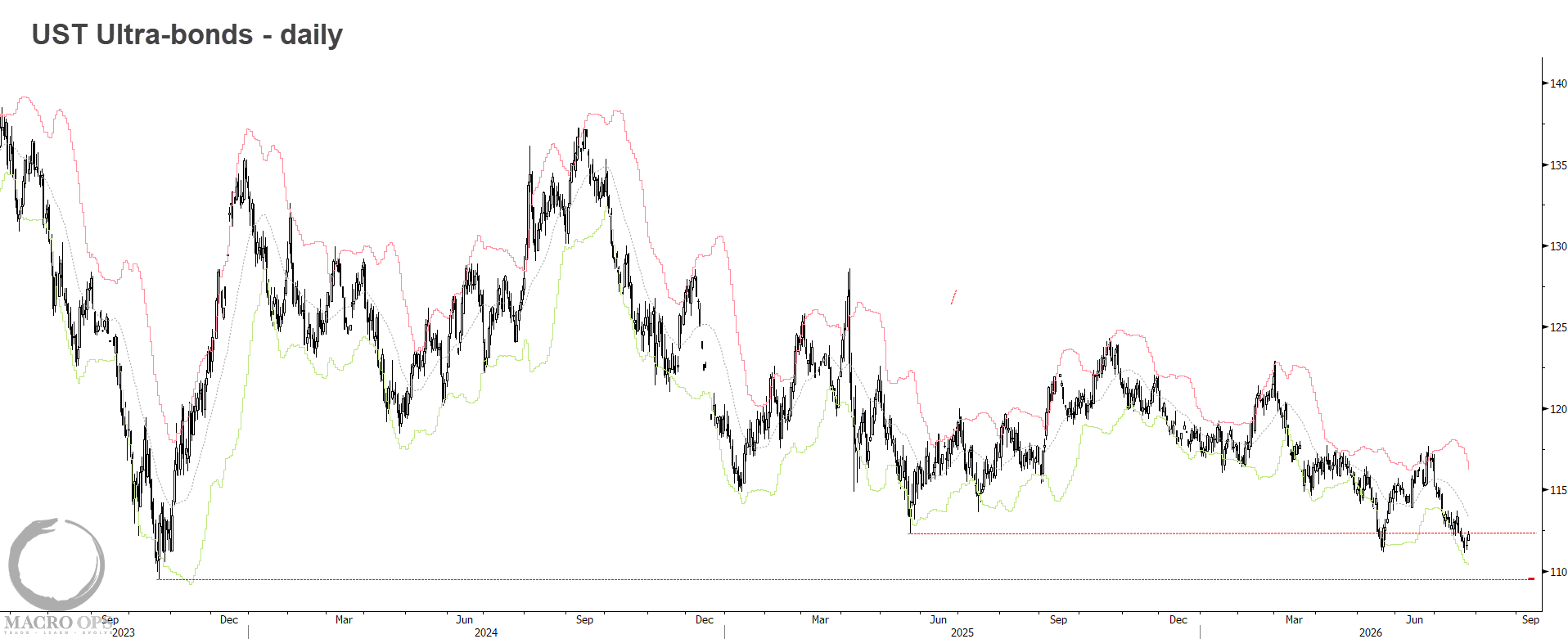
3. Ultras on the daily. Looks like a possible double bottom around the recent key pivot low. No trade here. Still watch and wait.
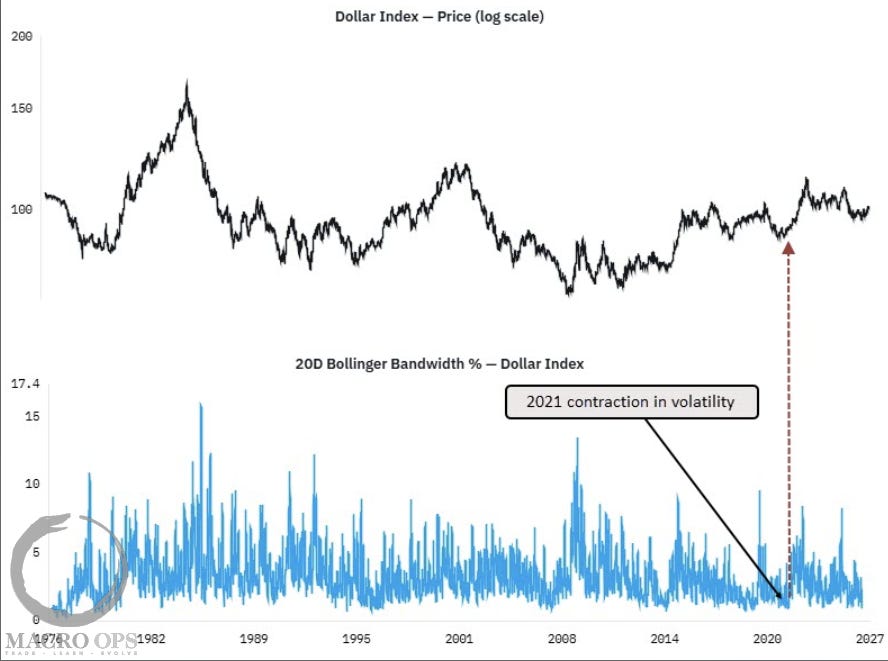
4. Our new teammate Dean Christians of TPMR pointed out last week (link) that the dollar is in an extremely tight short-term compression regime:
“Its Bollinger Band spread has compressed to only 0.93%, a reading that ranks in just the 4th percentile of all observations dating back to 1972. That’s an unusually quiet market. Even more interesting, the spread has fallen to its lowest level since December 2021, right before the dollar launched into a major advance as the Fed embarked on its 2022 tightening campaign. While volatility compression doesn’t predict direction, the historical backdrop suggests the current period of calm may not last much longer. As a reminder, the Federal Reserve meets next week.”
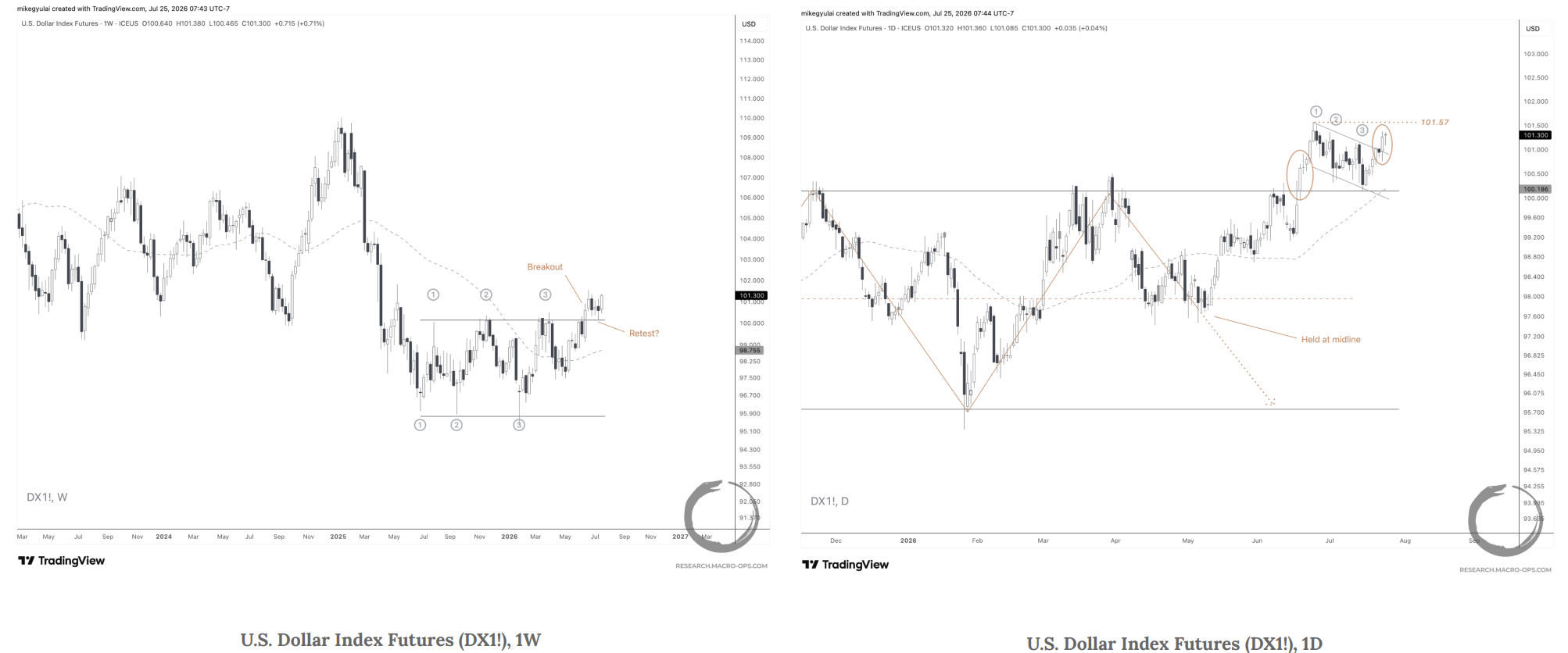
5. Our Lead Technical Analyst Mike G notes the DXY’s completed bull flag in his latest weekend must-read (link).
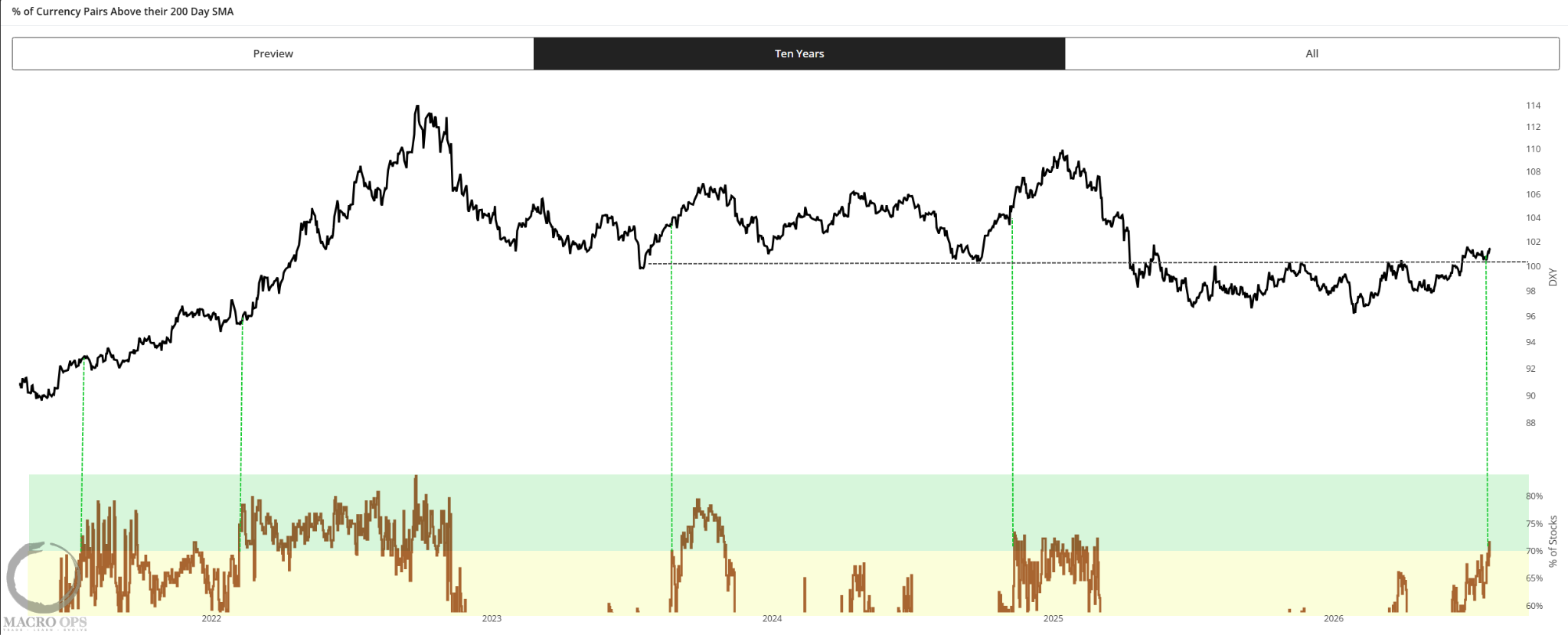
6. DXY breadth, measured by the percentage of pairs above their 200-day, recently crossed above 70%. That’s broadening strength. Green verticals mark past instances of a first cross above 70% in at least three months.
I don’t like how slow the dollar’s been to follow through post-breakout. The data still favors the upside case. FOMC will drive near-term direction, but we’re considering buy stops above last week’s highs.
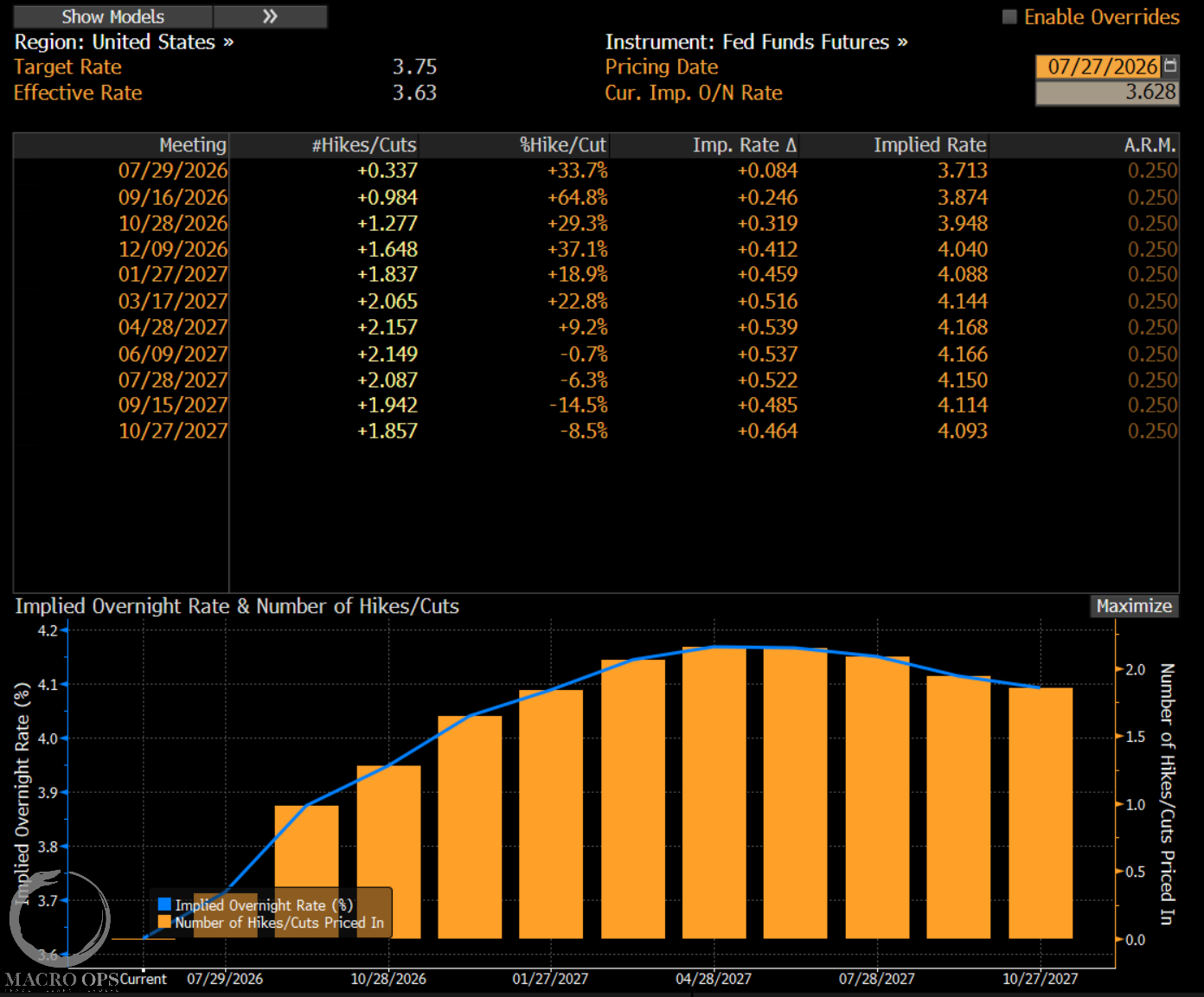
7. The market is pricing one hike by September’s meeting. Harley Bassman (@ConvexityMaven) is one of the few bond commentators I read closely. His post from last week is worth chewing on:
“My two cents....
I have been on record as “higher for longer” against the naysaying Team Transitory. Thus I pushed back hard on the late-2025 expectation of three FED rate cuts.
To my chagrin, I was more right than anticipated as I now expect the FED to hike by 50bp in July.
A 25bp hike is too chicken $hit to match Warsh’s rhetoric, and 75bp implies he knows we have a massive problem, which he does not.
Moreover, this recent inflation is all sourced from Oil, which is indeed “transitory”; and I do not see how higher rates changes that. What matters is wage and service inflation, which is not crazy; and of course OER which is projected to decline.
A 50bps hike shows there is a new sheriff in town, and he is not beholden to the President. The tail risk, of course, is a 1994 Greenspan hike, but I am not sure he wants to devastate the Globally-linked UST rates plumbing (SVB redux anyone) with a full on Yield Curve inversion.
Everybody on the planet is into the “steepener”, and so I wonder if the selling of the front-end (T2s) is driven by new positions ahead of Warsh, or just stop-out after stop-out of all the long Yield Curve trades....it feels like the latter.
Enjoy the summer.”
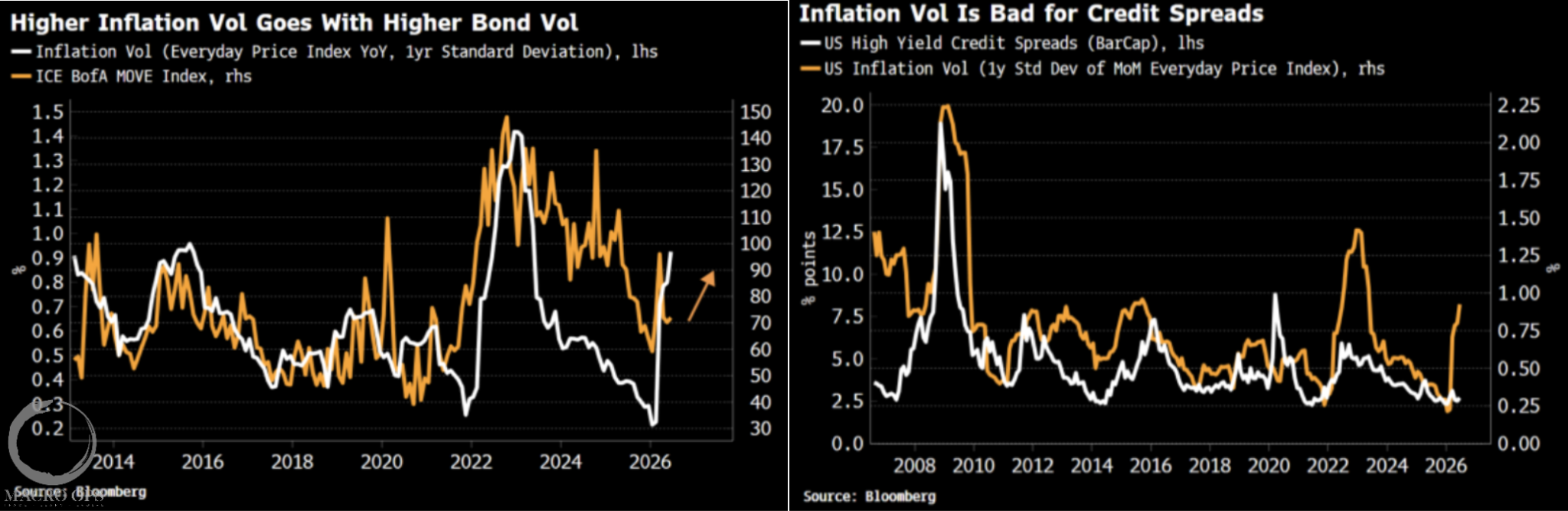
8. Bloomberg’s Simon White had a good piece last week on the pickup in inflation volatility. It’s not the level of inflation that drives the pricing of risk assets. It’s the variance.
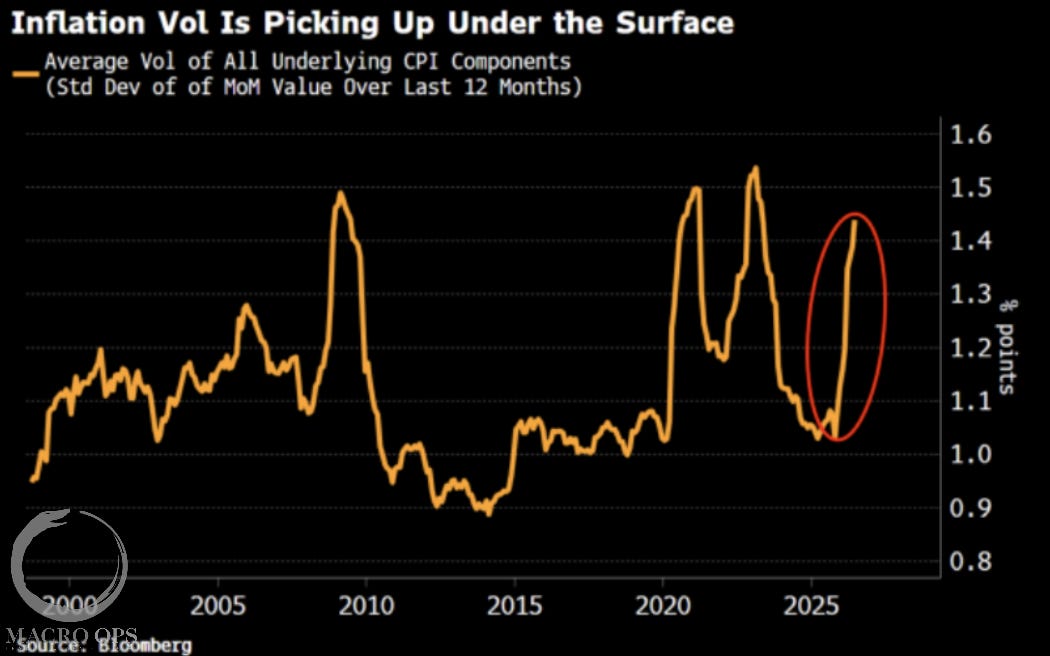
9. White’s point: “inflation exhibits heteroskedasticity, ie its variance rises as it increases. That’s clear as day if we split US CPI into deciles, with the highest decile having by far the largest inflation volatility on average.”
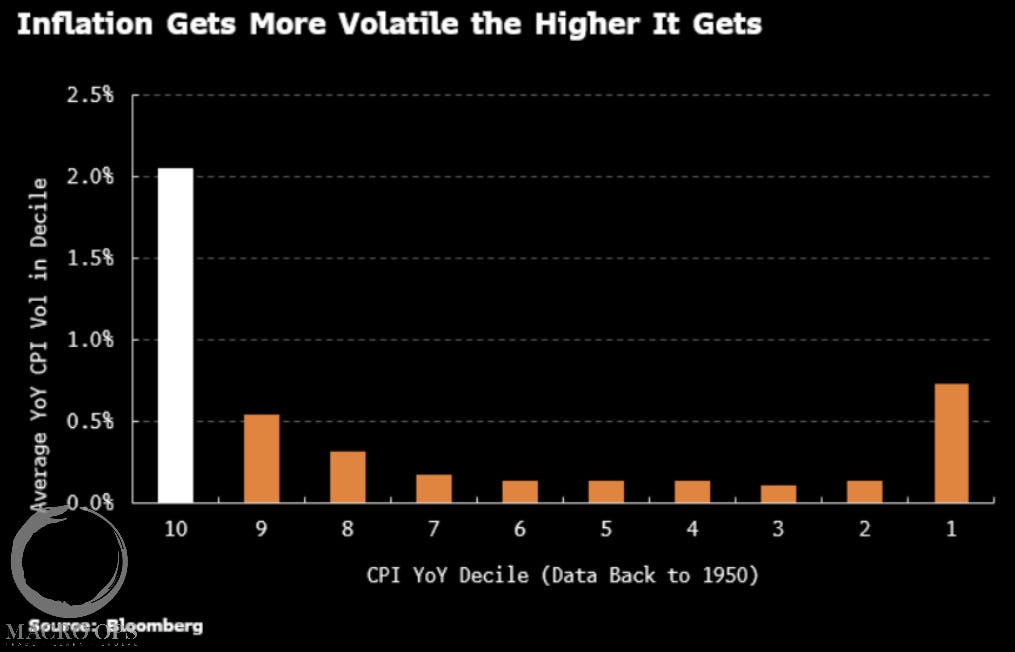
10. He shows the causal chain. Rising inflation vol leads to higher term premia and wider credit spreads.
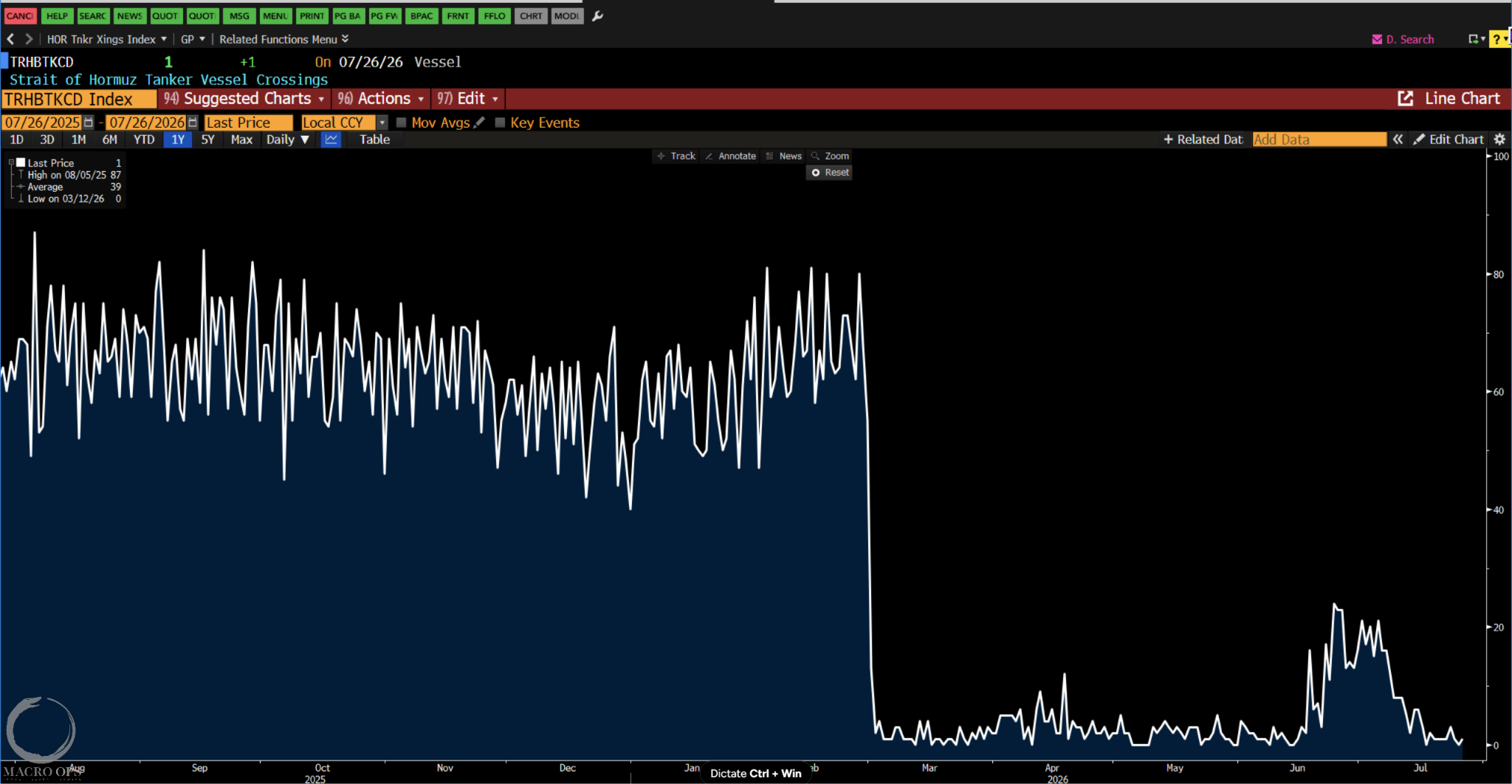
11. Some of this is energy, courtesy of the US-Iran war. Trump reportedly called off an escalatory strike over the weekend, citing concerns over depleted US munition stockpiles. Doesn’t change the picture. Strait traffic is back to nil, and that starts to matter for oil and everything downstream. Fertilizer. Food.
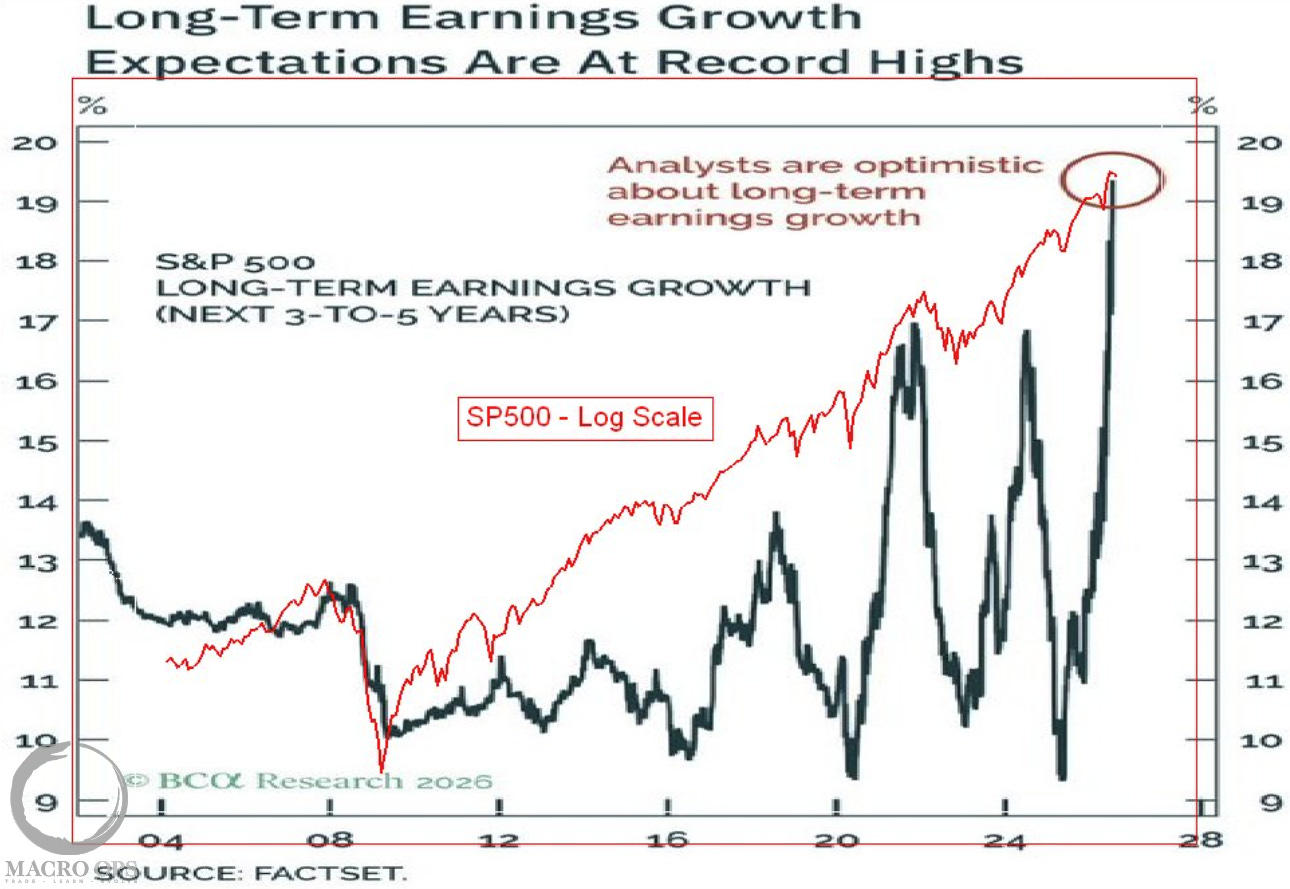
12. Great chart from BCA Research with tweaks from @McClellanOsc. Better to buy when expectations are depressed, not exuberant like they are now.
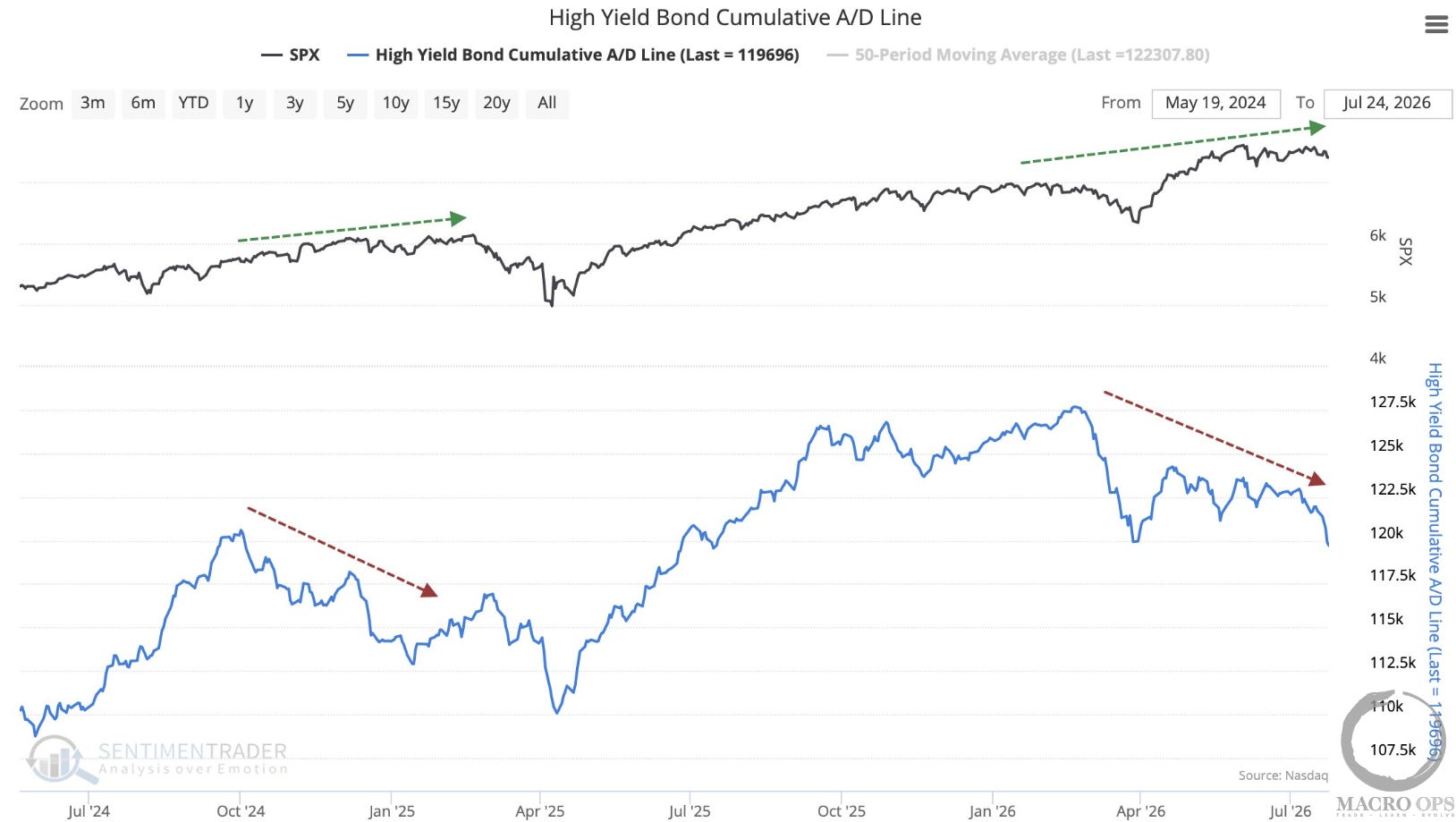
13. We’re not bearish but we are increasingly cautious. Add the deterioration in credit to the list (chart from Jason Goepfert / SentimenTrader).
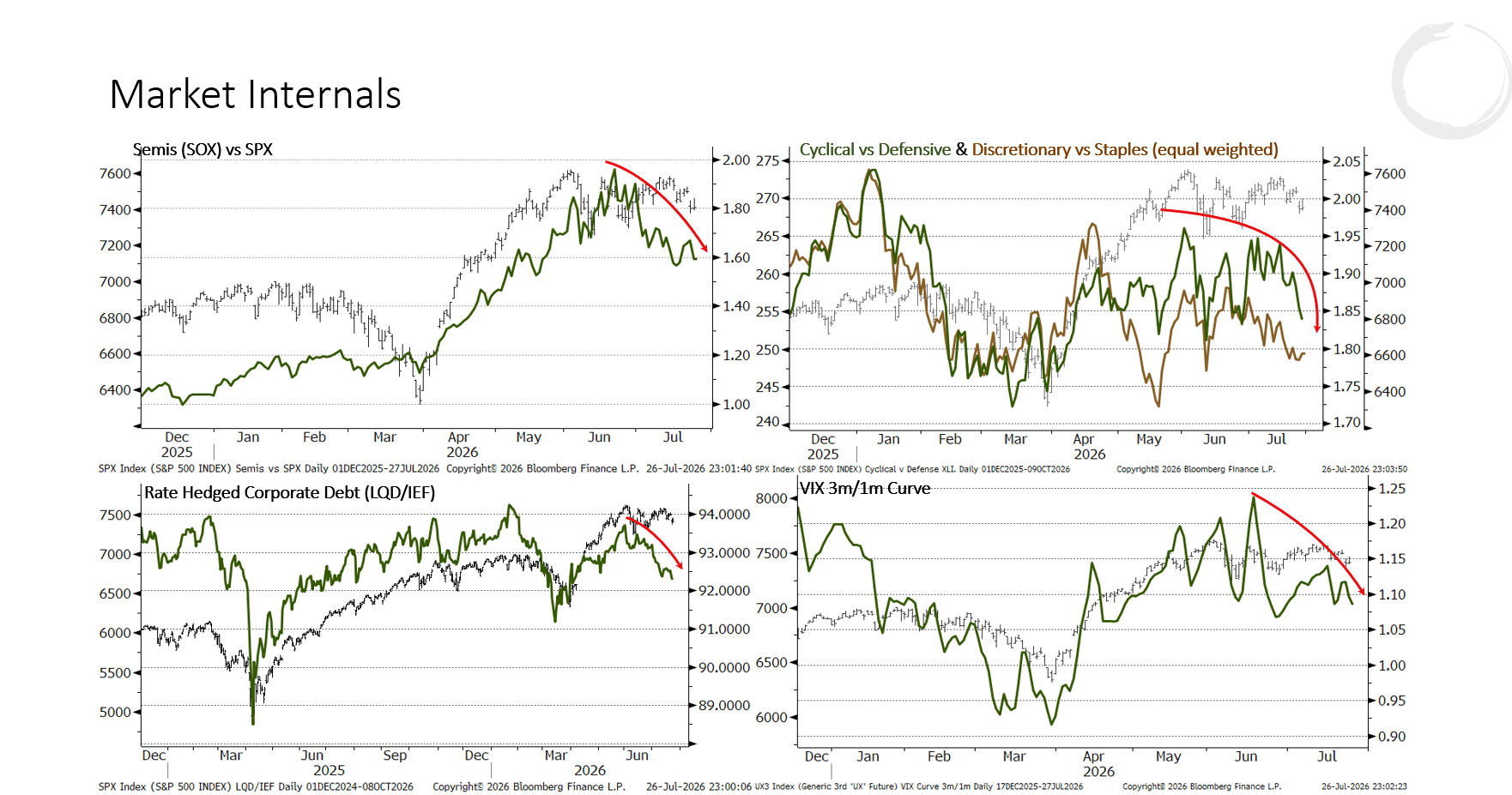
14. Internals continue to deteriorate. We still haven’t seen enough in the weight of the evidence to call a major trend change, but the backdrop points to more near-term weakness and volatility. If Bassman is right and the Fed hikes this week, let alone 50bps, we could be in for a volatility pocket.
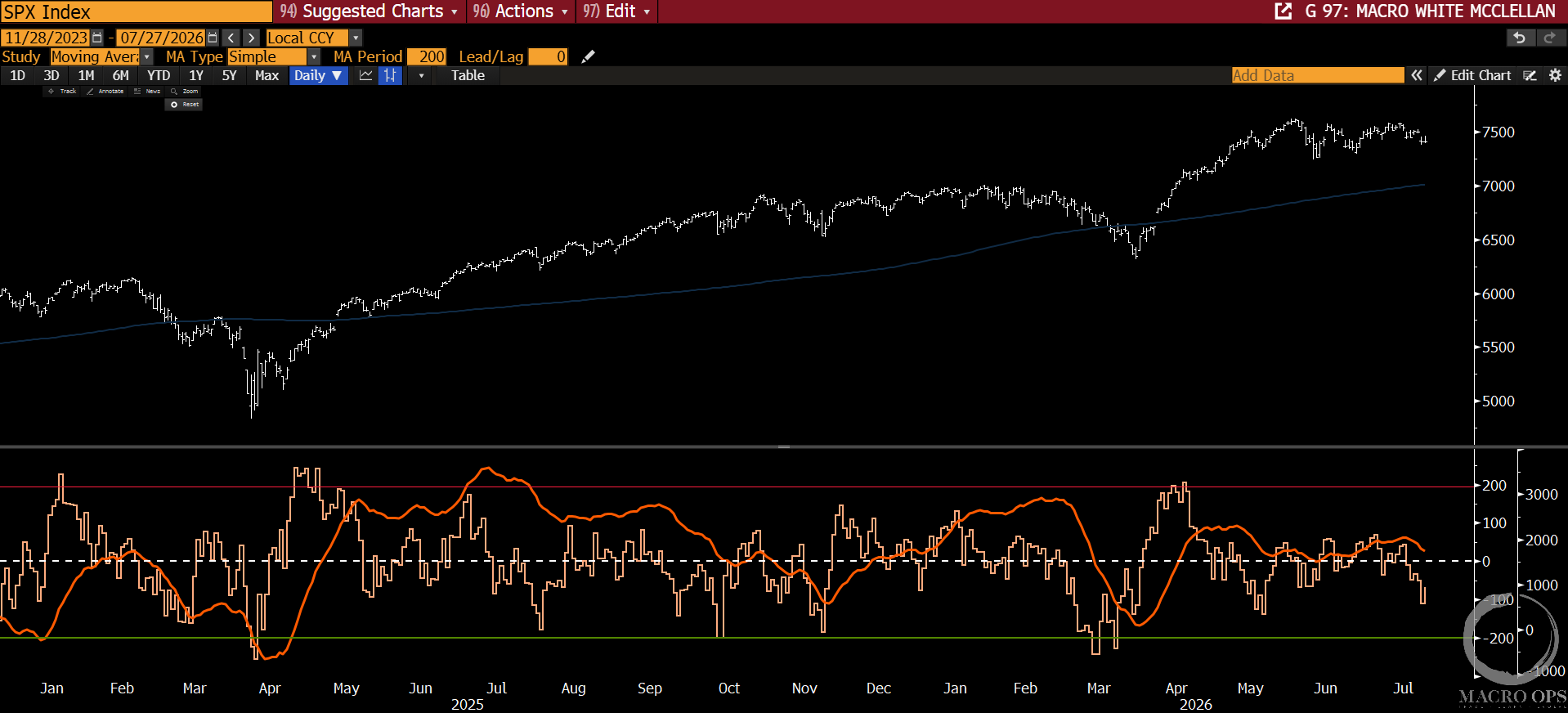
15. Our preferred short-term breadth measure, the McClellan Summation and Oscillator, have both rolled over. That confirms what internals and credit are telling us. Be defensive and wait for clarity or a positive catalyst. We’re comfortable holding high cash and will reassess post-FOMC.
Thanks for reading.
Your Macro Operator,
Alex